

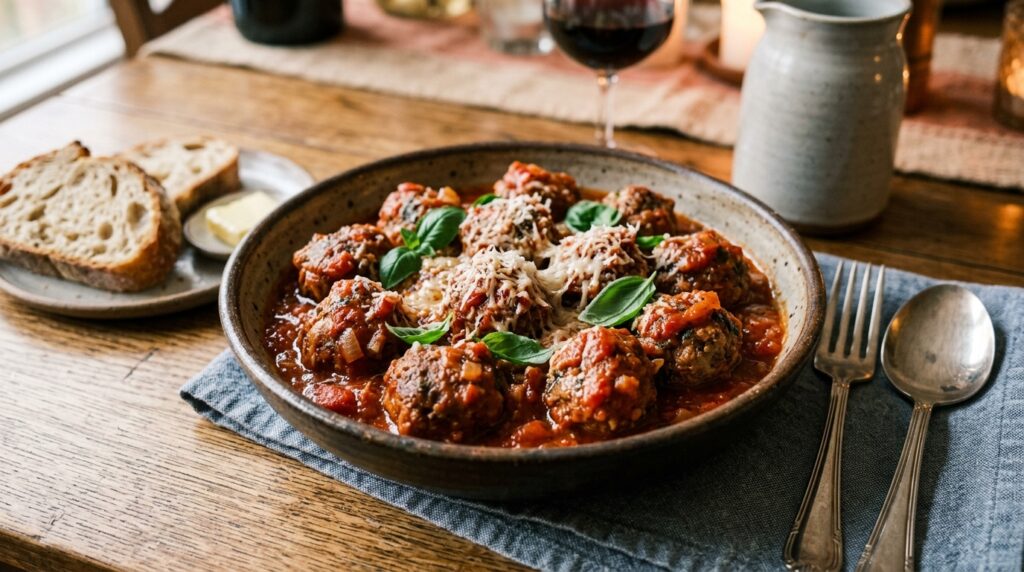

Few dishes feel as satisfying and universally loved as a perfectly made meatball — tender, juicy, and packed with flavor, whether simmered in marinara, tucked into a sandwich, or served over a bed of pasta. Meatballs are one of those recipes every home cook should have in their back pocket: simple to make, endlessly customizable, and great for everything from weeknight dinners to party appetizers.
In this guide, you’ll find a foolproof classic meatball recipe, step-by-step instructions, tips for keeping them tender and juicy, three cooking methods to choose from, common mistakes to avoid, and a handful of delicious variations to try.
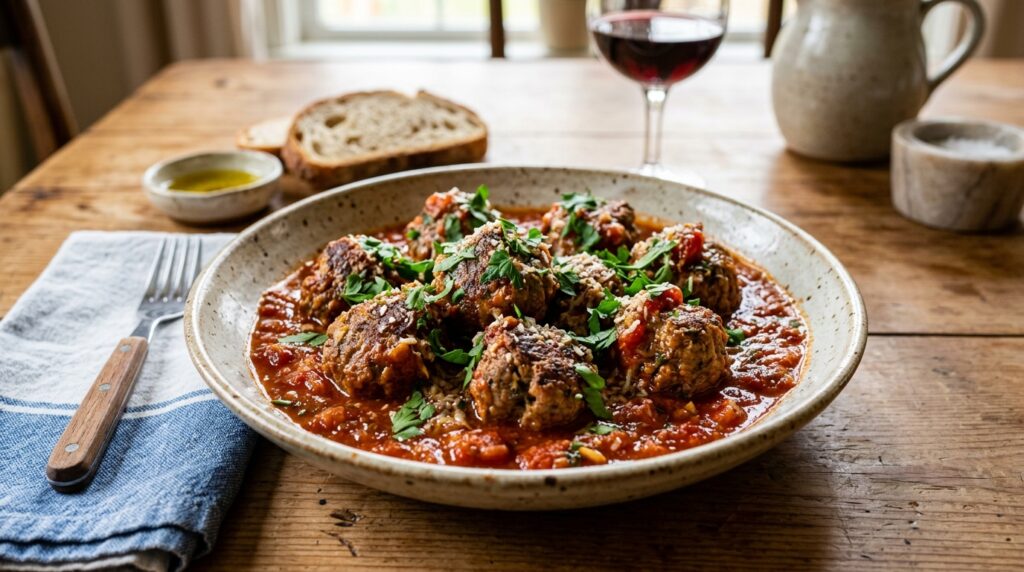
What Makes a Great Meatball?
The best meatballs are tender and moist on the inside, with a flavorful, slightly browned exterior. The secret lies in a few key techniques: not overmixing the meat, using a binder like breadcrumbs soaked in milk, and cooking them gently so they stay juicy instead of drying out.
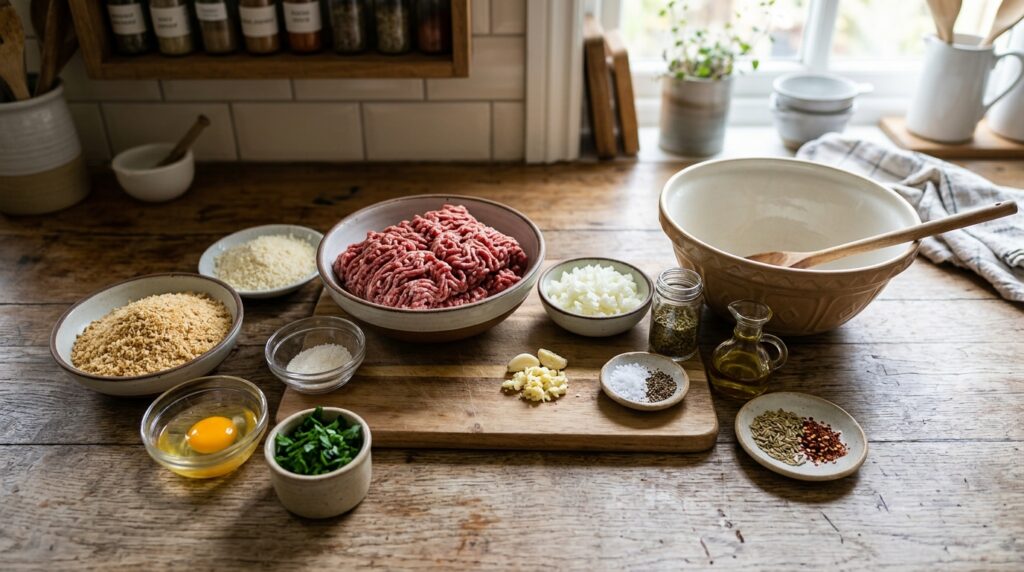
Ingredients
For the Meatballs
- 1 pound ground beef (80/20 blend recommended)
- ½ pound ground pork (or use all beef if preferred)
- ¾ cup breadcrumbs (plain or Italian-style)
- ¼ cup milk
- 1 large egg
- ½ cup grated Parmesan cheese
- 3 cloves garlic, minced
- 2 tablespoons fresh parsley, chopped (or 2 teaspoons dried)
- 1 teaspoon salt
- ½ teaspoon black pepper
- ½ teaspoon dried oregano
- ¼ teaspoon red pepper flakes (optional)
For Serving (Optional)
- 2–3 cups marinara sauce
- Cooked spaghetti or your favorite pasta
- Crusty bread, for meatball sandwiches
- Extra Parmesan and fresh basil, for garnish
Step-by-Step Instructions
Step 1: Soak the Breadcrumbs
In a small bowl, combine the breadcrumbs and milk. Let it sit for 5 minutes until the breadcrumbs absorb the milk and form a soft, paste-like mixture. This step, called a “panade,” is key to keeping your meatballs moist and tender.
Step 2: Combine the Ingredients
In a large bowl, combine the ground beef, ground pork, soaked breadcrumb mixture, egg, Parmesan cheese, garlic, parsley, salt, pepper, oregano, and red pepper flakes (if using).
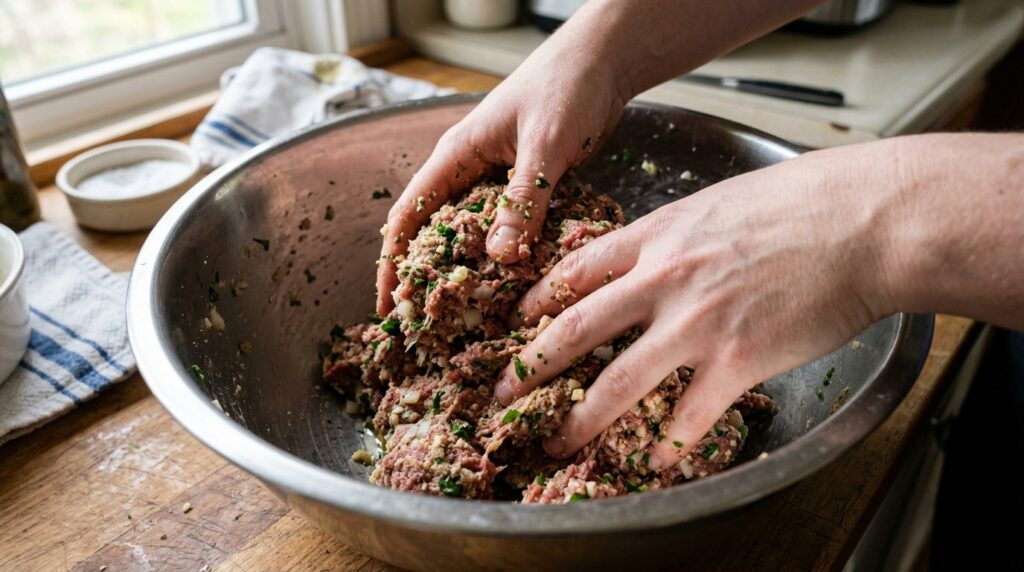
Step 3: Mix Gently
Using your hands, mix the ingredients together just until combined. Avoid overmixing — this compacts the meat and leads to dense, tough meatballs instead of tender ones.
Step 4: Shape the Meatballs
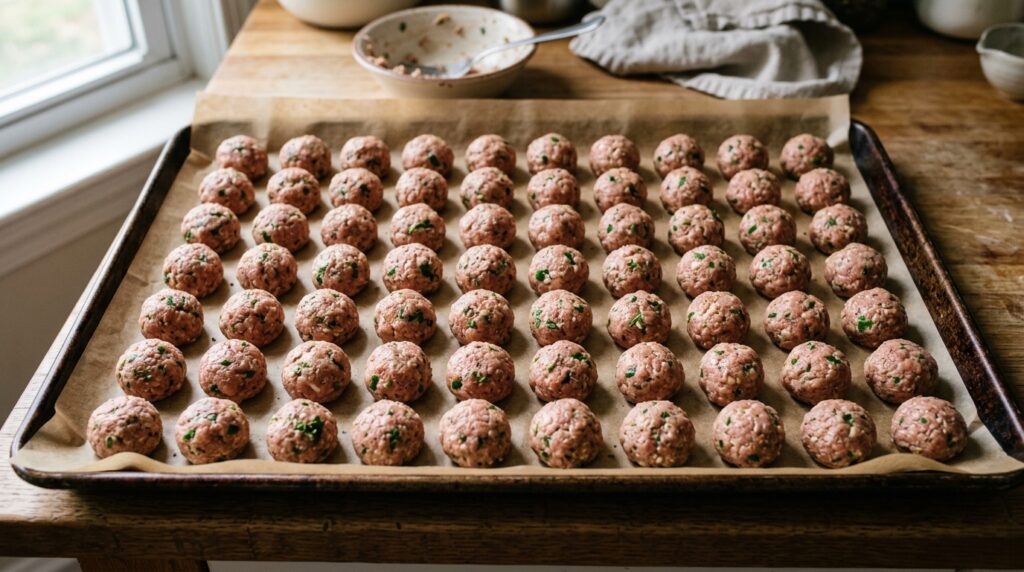
Using a cookie scoop or your hands, portion the mixture into balls about 1.5 inches in diameter (roughly 2 tablespoons each). Roll gently between your palms — don’t pack them too tightly. This recipe makes about 20–24 meatballs.
Step 5: Cook the Meatballs
Love recipes like this that won’t leave you feeling bloated? 👇

👉 Click here to get the Complete Flat Belly Diet Cookbook for Women & 7-Day Meal Plan now!
Choose one of the three cooking methods below based on your preference and the texture you’re after.
Method 1: Baking (Easiest, Most Hands-Off)
Preheat your oven to 400°F (200°C). Arrange the meatballs on a parchment-lined baking sheet, leaving space between each. Bake for 18–20 minutes, or until browned and cooked through (internal temperature of 160°F/71°C).
Method 2: Pan-Searing (Best Flavor and Texture)
Heat 2 tablespoons of olive oil in a large skillet over medium heat. Add the meatballs in a single layer, without overcrowding, and cook for 8–10 minutes, turning occasionally, until browned on all sides and cooked through.
Method 3: Simmering in Sauce (Most Flavorful, One-Pot Method)
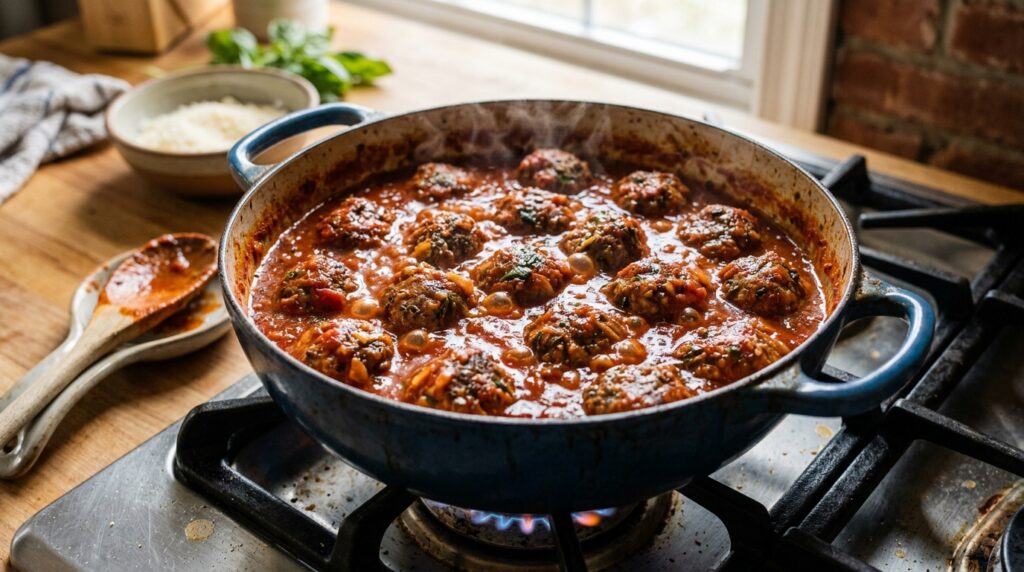
Brown the meatballs briefly in a skillet (2–3 minutes per side) just to develop color, then transfer them directly into a pot of simmering marinara sauce. Cover and let them gently simmer for 20–25 minutes, until fully cooked. This method infuses the meatballs with extra flavor as they finish cooking.
Step 6: Serve
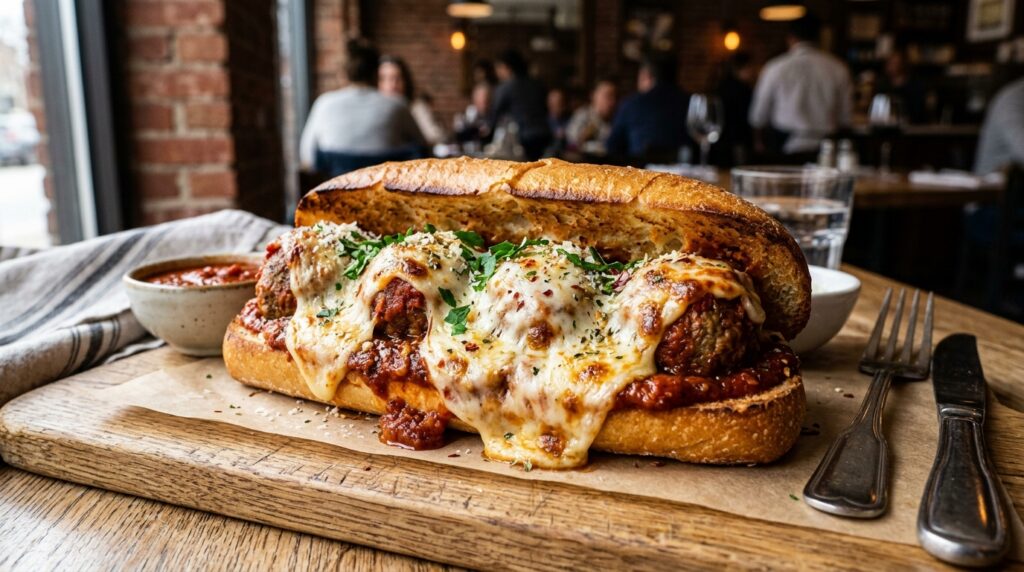
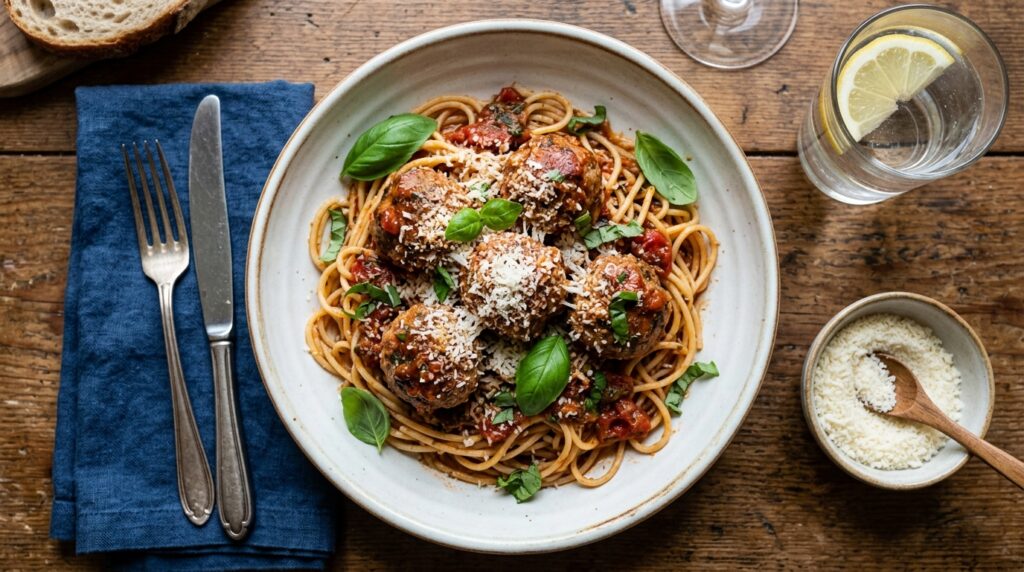
Serve your meatballs over pasta with extra marinara sauce, tucked into a toasted hoagie roll for a meatball sub, or on their own as an appetizer with toothpicks and a side of dipping sauce.
Tips for the Best Meatballs
- Use the panade (soaked breadcrumbs) — this keeps the meatballs moist instead of dry and dense.
- Don’t overmix the meat — mix just until combined to keep the texture tender.
- Use a mix of meats — combining beef and pork (or even veal) adds extra flavor and juiciness compared to beef alone.
- Keep your hands slightly wet or oiled when rolling the meatballs to prevent sticking.
- Don’t overcrowd the pan — give meatballs space so they brown properly instead of steaming.
- Use a meat thermometer — meatballs are done at an internal temperature of 160°F (71°C).
Common Mistakes to Avoid
- Skipping the panade, which results in dry, dense meatballs
- Overmixing the meat mixture, which leads to a tough, rubbery texture
- Using only lean meat, which can dry out during cooking — a little fat keeps things juicy
- Overcrowding the pan or sheet, which causes meatballs to steam instead of brown
- Cooking straight from the fridge, which can result in uneven cooking — let the mixture sit at room temperature for 10–15 minutes before shaping if possible
Delicious Variations to Try
- Italian Turkey Meatballs — substitute ground turkey for a leaner option, adding 1 extra tablespoon of olive oil to keep them moist
- Swedish Meatballs — season with allspice and nutmeg instead of Italian herbs, and serve in a creamy brown gravy
- Spicy Buffalo Meatballs — toss baked meatballs in buffalo sauce and serve with ranch or blue cheese dip
- Asian-Style Meatballs — replace Italian seasonings with ginger, soy sauce, and sesame oil, and serve with a sweet chili glaze
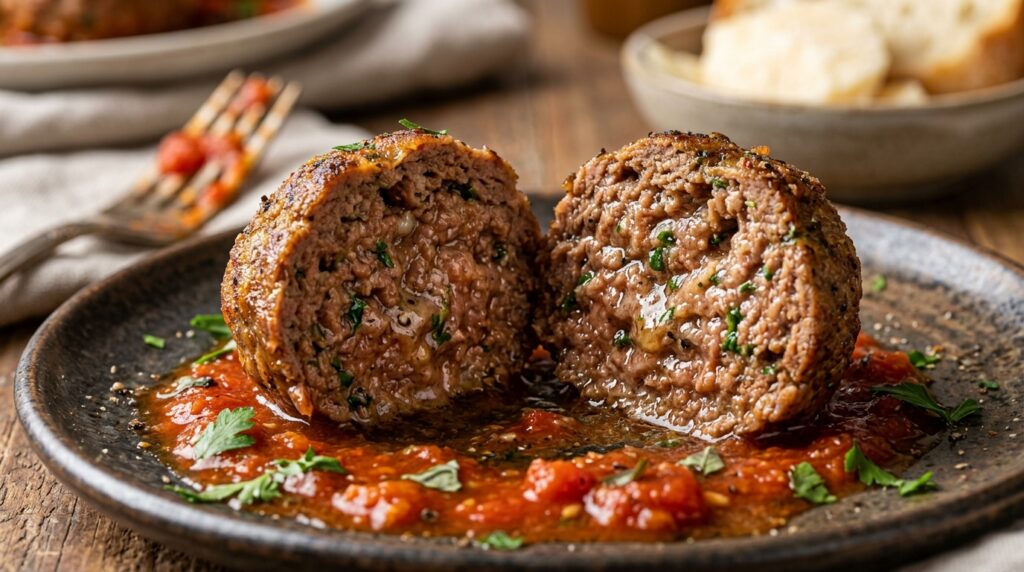
- Cheese-Stuffed Meatballs — press a small cube of mozzarella into the center of each meatball before sealing and cooking for a melty surprise
Storage and Freezing
- Refrigerator: Store cooked meatballs in an airtight container for up to 4 days.
- Freezer (cooked): Freeze in a single layer on a baking sheet until solid, then transfer to a freezer bag for up to 3 months.
- Freezer (uncooked): Shaped, raw meatballs can also be frozen the same way — cook directly from frozen, adding a few extra minutes to the cooking time.
- Reheating: Warm gently in a saucepan with a bit of sauce over low heat, or microwave in short bursts to avoid drying them out.
Frequently Asked Questions
Can I make meatballs without breadcrumbs? Yes — you can substitute crushed crackers, panko, or even cooked rice as a binder. For a low-carb option, almond flour works in a pinch.
Why are my meatballs falling apart? This is usually due to not enough binder (egg and breadcrumbs) or not letting them rest briefly before cooking. Make sure the mixture holds together when you shape it.
Can I make these ahead of time? Absolutely — shape the meatballs and refrigerate them (uncooked) for up to a day, or freeze them for longer storage as noted above.
What’s the best meat ratio for juicy meatballs? A blend of 80/20 ground beef with ground pork gives the best balance of flavor and moisture. All-lean meat tends to dry out more easily.
Final Thoughts
This meatball recipe is everything a comforting, classic dish should be — tender, flavorful, and endlessly versatile. Whether you bake them, pan-sear them, or simmer them right in the sauce, these meatballs are sure to become a regular in your dinner rotation. Try one of the variations above once you’ve mastered the basics, and don’t forget the extra Parmesan on top.
Did you make this recipe? Leave a comment below and let me know how it turned out!