
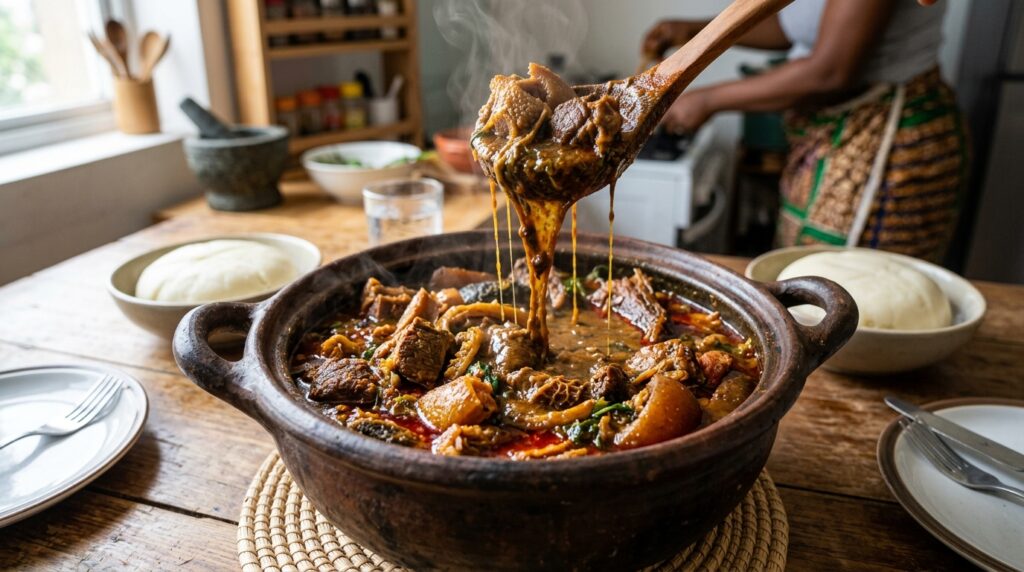

Ogbono soup is one of the most cherished soups in Nigerian cuisine — a thick, hearty, and deeply satisfying “draw” soup made from ground ogbono seeds (wild African bush mango seeds). Loved for its smooth, viscous texture that makes swallowing pounded yam or eba almost effortless, ogbono soup is rich with the flavors of palm oil, assorted meats, smoked fish, and ground crayfish, all brought together in one gloriously comforting pot.
Whether you are a complete beginner who has never made a draw soup before or an experienced cook looking to perfect your technique, this comprehensive guide covers everything — from understanding what ogbono actually is, to a foolproof step-by-step cooking method, tips for achieving the perfect draw, common mistakes to avoid, popular variations, and answers to the questions people ask most. By the end, you will be able to make a pot of ogbono soup that draws beautifully and tastes absolutely delicious.
What Is Ogbono Soup?
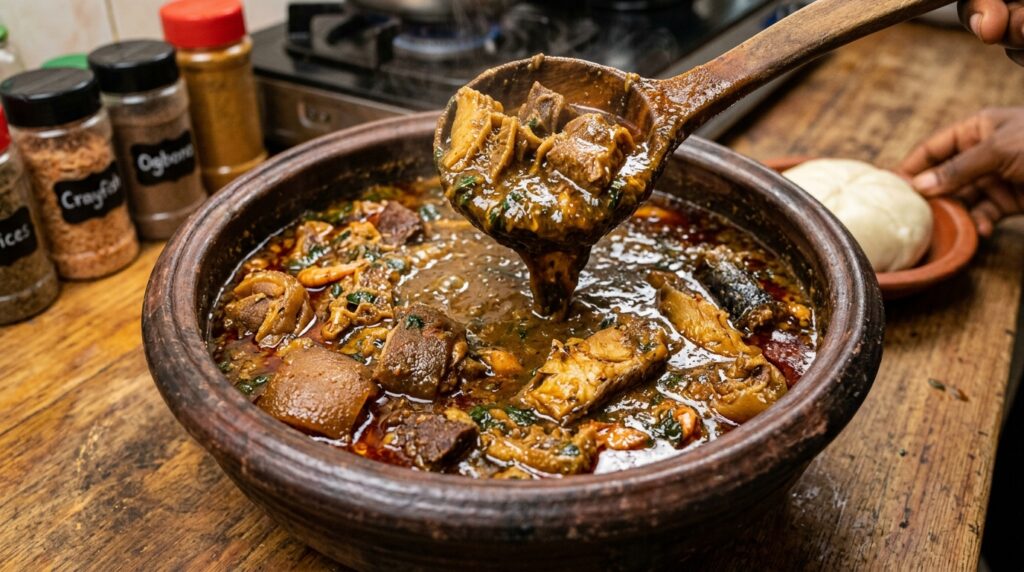
Ogbono soup is made from the ground seeds of the African bush mango (Irvingia gabonensis), known as ogbono in Igbo, apon in Yoruba, and wild mango seed in English. When these ground seeds meet hot oil and liquid, they dissolve and release a natural thickening agent that gives the soup its famous slippery, stretchy, mucilaginous texture — what Nigerians affectionately call “draw.”
Unlike okro soup, where the draw comes from visible pieces of okra, ogbono dissolves completely into the broth, creating a uniformly smooth, thick, and velvety soup. It is enjoyed across all regions of Nigeria and is a staple at family dinners, parties, and celebrations alike. Ogbono soup can be made plain, with vegetables, or combined with okro or egusi for even more texture and depth.
Ingredients
For the Soup
- 1 cup ground ogbono seeds
- ½ cup red palm oil
- 500g assorted meats (beef, tripe/shaki, ponmo/cow skin, or goat meat)
- 1 cup stockfish, soaked and cleaned
- 1 cup smoked fish or dried fish, cleaned and deboned
- 2 tablespoons ground crayfish
- 2–3 scotch bonnet peppers (atarodo), blended or finely chopped — adjust to taste
- 1 medium onion, divided (half for cooking the meat, half finely chopped for the soup)
- 2 seasoning cubes (Maggi or Knorr)
- Salt to taste
- 2–3 cups meat stock (from cooking the assorted meat)
- 2 cups fresh or frozen ugu (pumpkin leaves), spinach, or bitter leaf, washed and shredded
For Cooking the Meat
- 1 small onion, roughly chopped
- 1 seasoning cube
- Salt to taste
Step-by-Step Instructions
Step 1: Cook the Assorted Meat and Stockfish
Wash all the assorted meats thoroughly under cold running water. Place them in a pot with the roughly chopped onion, seasoning cube, and salt, and add just enough water to barely cover the meat. Cook over medium-high heat for 30–45 minutes, until everything is tender. Tougher cuts like shaki should go in first, with softer meats added later so everything finishes at the same time. Add the stockfish about halfway through so it softens properly. Once done, set the meats aside and reserve every drop of the stock — it is the flavor foundation of your soup.
Step 2: Prepare the Ogbono
If you bought whole ogbono seeds, grind them into a fine powder using a dry blender or spice grinder. If you bought pre-ground ogbono, give it a quick check for any lumps and break them up. For the smoothest soup, some cooks like to mix the ground ogbono with the palm oil into a paste before cooking — this method, used in this recipe, helps the ogbono dissolve evenly and prevents lumps from forming.
Step 3: Dissolve the Ogbono in Palm Oil
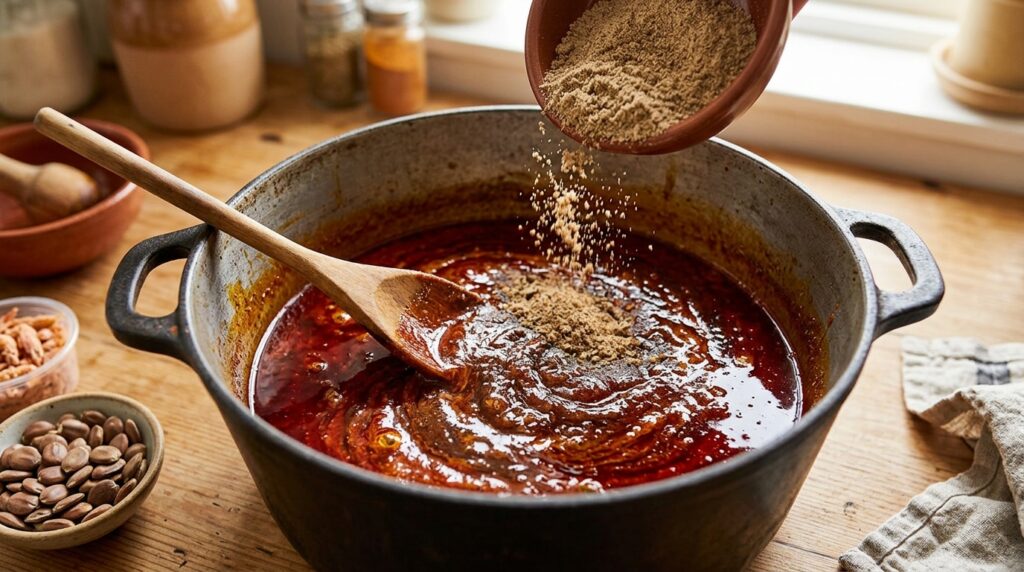
Place a clean, dry pot over low heat and add the palm oil. Allow it to melt and warm gently for about a minute — it should be warm, not smoking hot. Add the ground ogbono to the warm oil and stir continuously with a wooden spoon. The ogbono will begin to dissolve into the oil, forming a smooth, thick, chocolate-brown paste. Keep the heat low and keep stirring for 2–3 minutes. This gentle blooming step is the secret to a lump-free, beautifully drawing soup. Do not let the ogbono burn — burnt ogbono loses its drawing power and turns bitter.
Step 4: Add the Meat Stock Gradually
With the heat still on low to medium, begin adding the warm reserved meat stock to the ogbono paste a little at a time — about half a cup per addition — stirring continuously after each pour. You will notice the mixture thickening and becoming stretchy and elastic almost immediately as the ogbono activates. Keep adding stock gradually until the soup reaches your preferred consistency. It should be thick and drawing, but still fluid enough to stir easily. Once all the stock is in, allow the soup to cook uncovered on medium heat for about 10 minutes, stirring occasionally so it does not stick to the bottom. Cooking ogbono uncovered is important — covering the pot at this stage can cause the draw to break down.
Love recipes like this that won’t leave you feeling bloated? 👇

👉 Click here to get the Complete Flat Belly Diet Cookbook for Women & 7-Day Meal Plan now!
Step 5: Season the Soup
Add the blended scotch bonnet peppers, finely chopped onion, ground crayfish, and seasoning cubes. Stir well and let the soup simmer for another 5–7 minutes so the flavors can develop and the raw pepper taste cooks out. Taste and adjust the salt and seasoning.
Step 6: Add the Proteins
Add the cooked assorted meats, stockfish, and smoked or dried fish to the pot. Stir gently to combine, being careful not to break up the fish too much. Let everything simmer together for about 10 minutes so the proteins can soak up the rich, drawing broth. If the soup becomes thicker than you like, loosen it with a splash of stock or hot water.
Step 7: Add the Vegetables
Add the washed and shredded ugu, spinach, or bitter leaf to the pot. Stir gently to incorporate, then cook uncovered for a final 3–5 minutes, just until the greens are wilted but still vibrant. Taste one last time and adjust the seasoning if needed.
Step 8: Serve
Your ogbono soup is ready. Serve it piping hot with pounded yam, eba, fufu, amala, or semo, making sure every serving gets a generous share of meat, fish, and that gloriously drawing broth.
Tips for the Best Ogbono Soup
- Buy good quality ogbono. Fresh, well-dried ogbono seeds have the strongest drawing power. Old or poorly stored ogbono draws weakly and can taste stale. If buying pre-ground, purchase from a store with high turnover, or better yet, buy whole seeds and grind them yourself.
- Bloom the ogbono in warm (not hot) oil. This is the single most important technique in the entire recipe. Dissolving the ogbono into gently warmed palm oil before adding liquid guarantees a smooth, lump-free soup with maximum draw.
- Add stock gradually and keep stirring. Pouring all the liquid in at once shocks the ogbono and can create lumps. Slow, steady additions with constant stirring build a silky, even texture.
- Cook uncovered. Trapping steam in the pot is known to reduce the draw of ogbono soup. Leave the lid off from the moment the ogbono goes in.
- Do not rush the simmer. Ogbono needs those 10–15 minutes of gentle cooking to lose its raw taste and develop its full, nutty flavor.
- Be generous with crayfish. Ground crayfish provides the deep umami backbone that makes ogbono soup taste complete.
Common Mistakes to Avoid
- Burning the ogbono in overheated oil, which destroys its drawing ability and gives the soup a bitter taste. Keep the heat low during the blooming stage.
- Adding all the liquid at once, which causes lumps and uneven texture. Always add stock gradually while stirring.
- Covering the pot while cooking, which is widely known to reduce or break the draw. Cook ogbono soup uncovered.
- Using too much ogbono, which makes the soup gluey and overly thick. One cup of ground ogbono is enough for this quantity — you can always thicken more, but you cannot easily undo an over-thickened pot.
- Adding vegetables too early, which overcooks them, dulls their color, and can also reduce the draw. Greens go in during the final few minutes only.
Delicious Variations to Try
- Ogbono and Okro Soup — The ultimate double-draw combination. Add a cup of sliced or grated fresh okro in the last 5–7 minutes of cooking for extra texture and even more draw.
- Ogbono and Egusi Soup — Add 3–4 tablespoons of ground egusi (mixed into a paste with a little water) alongside the ogbono for a thicker, nuttier, more substantial soup.
- Plain Ogbono (No Vegetables) — A minimalist, deeply traditional version made without any leafy greens, letting the pure drawing broth and proteins take center stage. Many ogbono purists insist this is the best way to enjoy it.
- Seafood Ogbono — Swap the assorted meats for fresh catfish, prawns, and periwinkles, added gently in the final 10–15 minutes of cooking.
- Ogbono with Bitter Leaf — Use well-washed bitter leaf as your vegetable for a slightly bitter edge that beautifully balances the richness of the palm oil and ogbono.
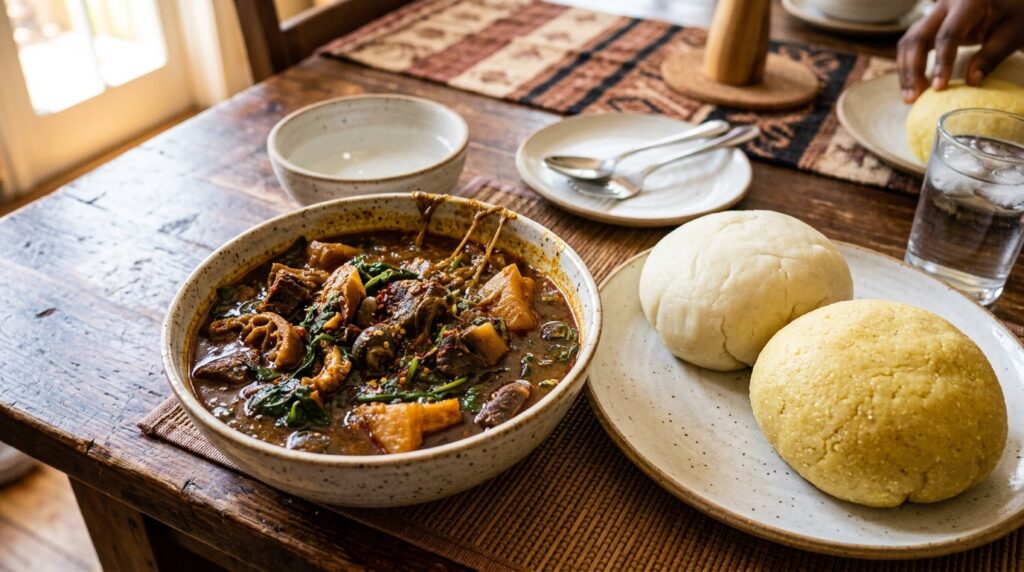
What to Serve with Ogbono Soup
Ogbono soup was practically made for swallow foods — the draw makes every bite glide down effortlessly.
Pounded Yam — The classic partner. Smooth and stretchy, it is the perfect vehicle for a drawing soup. Eba (Garri) — Firm and slightly tangy, eba with ogbono is one of the most popular everyday combinations in Nigeria. Fufu — Soft, doughy, and mild, letting the rich soup do all the talking. Amala — The earthy flavor of yam flour amala pairs wonderfully with ogbono’s nutty depth. Semovita (Semo) — Light, smooth, and easy — a great weeknight option. White Rice — Less traditional, but a spoon of thick ogbono over hot rice is quietly delicious.
Storage and Reheating
Refrigerator: Allow the soup to cool completely, then store in an airtight container for up to 4 days. The draw may reduce slightly after refrigeration — this is normal. Freezer: Ogbono soup freezes well for up to 2 months. Portion it out before freezing so you only thaw what you need. Reheating: Reheat gently on the stovetop over medium-low heat, stirring occasionally and adding a small splash of hot water or stock to bring back the consistency. Avoid boiling it aggressively, which can further reduce the draw.
Frequently Asked Questions
Why is my ogbono soup not drawing? The most common culprits are old or low-quality ogbono seeds, burning the ogbono in oil that was too hot, or cooking the soup covered. Buy fresh ogbono, bloom it gently in warm oil, and always cook with the lid off.
Why is my ogbono soup lumpy? Lumps form when ground ogbono meets liquid too quickly without being properly dissolved first. Always dissolve the ogbono into warm palm oil to form a smooth paste before gradually adding stock while stirring continuously.
Can I make ogbono soup without palm oil? Palm oil gives ogbono soup its traditional color and flavor, and its warmth is also the medium for dissolving the ogbono. You can technically bloom ogbono in warmed vegetable oil, but the flavor and color will be noticeably different from the authentic version.
What is the difference between ogbono soup and okro soup? Both are draw soups, but the thickener is different. Ogbono is made from ground wild mango seeds that dissolve completely into a smooth, uniform broth, while okro soup uses chopped or grated fresh okra, giving visible pieces and a fresher, more vegetable-forward flavor. They are also famously delicious combined in one pot.
Can I use frozen vegetables? Yes — frozen ugu or spinach works fine. Thaw and squeeze out excess water before adding so the soup does not become watery, and add them in the final few minutes as you would fresh greens.
How much ogbono should I use? As a rule of thumb, one cup of ground ogbono comfortably thickens a medium pot of soup (around 2–3 cups of stock). Use less for a lighter draw and slightly more for a very thick soup, adjusting the stock accordingly.
Final Thoughts
Ogbono soup is proof that some of the most comforting dishes come from the simplest techniques done well. Master the gentle blooming of ogbono in warm palm oil, add your stock patiently, keep the lid off, and you will be rewarded with a pot of thick, silky, beautifully drawing soup every single time. Whether you enjoy it plain, loaded with assorted meat and stockfish, or combined with okro for double the draw, ogbono soup served with hot pounded yam or eba is Nigerian comfort food at its absolute finest.
Did you make this recipe? Leave a comment below and let me know how it turned out!