

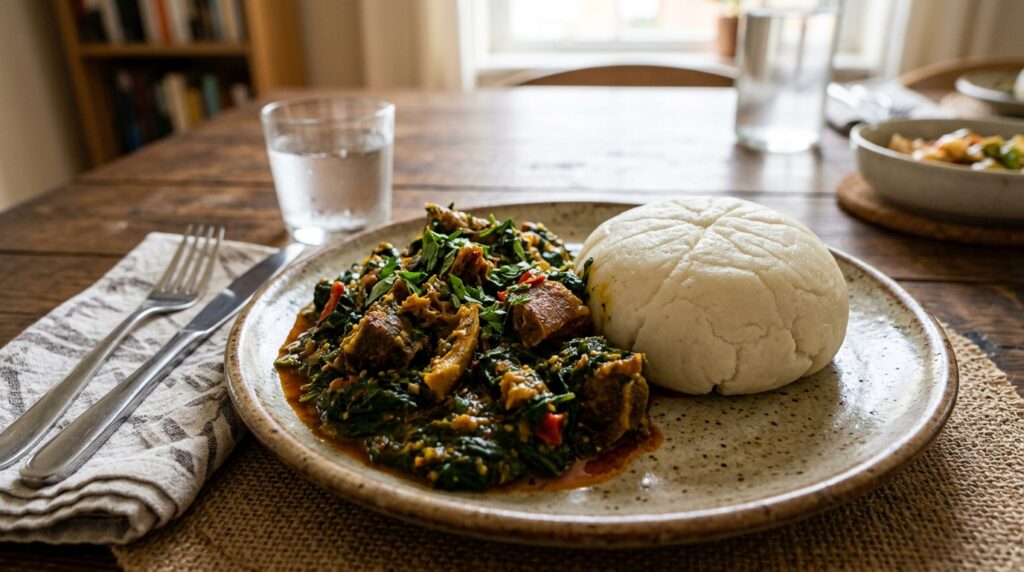
Nigerian vegetable soup is one of the most nourishing, flavorful, and beloved dishes in West African cuisine. Made with an abundance of fresh leafy greens simmered in a rich base of palm oil, assorted meats, smoked fish, and ground crayfish, this soup is proof that eating your vegetables can be an absolute delight. It is hearty enough to satisfy the biggest appetite, packed with nutrients, and endlessly rewarding to make.
This recipe follows the style of the famous Edikang Ikong — the celebrated vegetable soup of the Efik and Ibibio people of southern Nigeria, made with a generous combination of ugu (fluted pumpkin leaves) and waterleaf. But do not worry if you cannot find those exact greens where you live — this guide includes reliable substitutes, a foolproof step-by-step method, tips for keeping your soup rich rather than watery, common mistakes to avoid, popular variations including efo riro, and answers to the most frequently asked questions. By the end, you will be able to make a pot of vegetable soup so good that even the pickiest eater will ask for seconds.
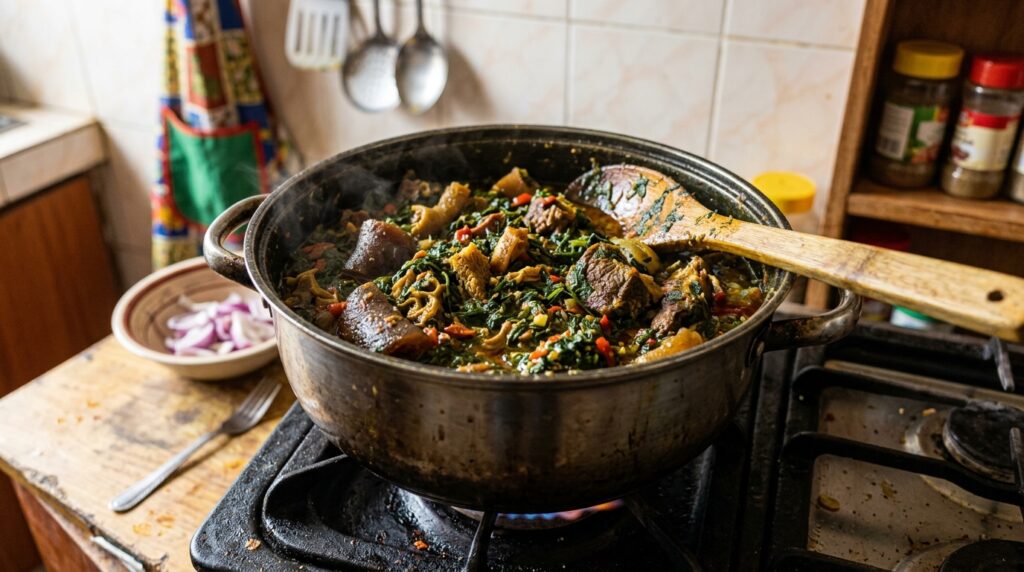
Nigerian vegetable soup refers to a family of soups in which fresh leafy greens are the star ingredient rather than an afterthought. The most famous version, Edikang Ikong, combines two greens: ugu (fluted pumpkin leaves), which holds its structure and provides a pleasant bite, and waterleaf, which is soft, tender, and releases moisture that helps cook the soup. The greens are simmered briefly in a deeply seasoned base of palm oil, meat stock, assorted meats, stockfish, dried fish, crayfish, and pepper.
Unlike watery Western-style vegetable soups, Nigerian vegetable soup is thick, rich, and concentrated — there should be very little free liquid in the pot. It is traditionally served with swallow foods like pounded yam, eba, or fufu, though it is equally wonderful with boiled rice, yam, or plantain.
Wash all the assorted meats thoroughly under cold running water. Place them in a pot with the roughly chopped onion, seasoning cube, and salt, adding just enough water to barely cover the meat. Cook over medium-high heat for 30–45 minutes until tender, starting with the toughest cuts like shaki and adding softer meats later. Add the stockfish about halfway through so it softens fully. Once everything is tender, set the meats aside and reserve the stock. For this soup you will only need about half a cup of stock — vegetable soup should be rich and thick, not swimming in liquid.
Proper washing is essential, especially for waterleaf, which grows close to the ground. Fill a large bowl with cold water, submerge the shredded greens, and swish them around so any sand sinks to the bottom. Lift the greens out (do not pour them out with the water) and repeat with fresh water two or three times until no grit remains. If using waterleaf, after washing, place it in a dry pot over low heat for 2–3 minutes to wilt it slightly and release some of its excess moisture, then set aside. Keep the ugu and waterleaf in separate bowls, as they go into the soup at different times.
Place a large, clean pot over medium heat and add the palm oil. Let it warm gently for about 2 minutes — do not bleach it. Add the finely chopped onion and fry for 2–3 minutes until soft and fragrant. Add the blended scotch bonnet peppers and fry for another 5 minutes, stirring, until the raw pepper smell cooks out completely.
Add the cooked assorted meats, stockfish, smoked or dried fish, and periwinkles (if using) to the pot. Add the ground crayfish, seasoning cubes, and the reserved half cup of meat stock. Stir gently to combine everything, then cover and let it simmer over medium heat for about 10 minutes so the proteins soak up all the rich, peppery flavors. Taste and adjust the salt — the base should be well seasoned, even slightly bold, because the vegetables you are about to add will mellow it out.
Add the wilted waterleaf (or spinach, if substituting) to the pot first. Stir it gently into the base and cook uncovered for about 3 minutes. Waterleaf releases moisture as it cooks, which loosens the soup slightly — this is exactly why it goes in before the ugu.

Now add the shredded ugu (or kale/collard greens) to the pot. Stir gently to combine everything, then cook uncovered for a final 3–5 minutes, just until the ugu is tender but still vibrant, deep green. Do not overcook — the greens should retain their color, texture, and nutrients. The finished soup should be thick and packed with vegetables, with the rich palm oil base coating everything rather than pooling as liquid.
Taste the soup one final time and adjust salt and seasoning as needed. Remove from the heat immediately — residual heat will continue cooking the greens even after you turn off the stove. Serve hot with pounded yam, eba, fufu, semo, or a side of boiled rice, yam, or plantain.
Pounded Yam — The classic pairing, especially for Edikang Ikong. Smooth, stretchy, and neutral, it lets the rich soup shine. Eba (Garri) — Firm and slightly tangy, an everyday favorite with vegetable soup. Fufu — Soft and doughy, perfect for scooping up every last bit of greens and sauce. Semovita (Semo) — Light and smooth, a great weeknight option. Amala — The earthy flavor of yam flour amala pairs beautifully, especially with efo riro. Boiled Rice, Yam, or Plantain — Vegetable soup spooned generously over any of these makes a complete, satisfying meal without swallow.
Refrigerator: Allow the soup to cool completely, then store in an airtight container for up to 3 days. The greens will soften further as it sits, but the flavor deepens beautifully. Freezer: Vegetable soup can be frozen for up to 2 months, though the texture of the greens will be softer after thawing. Freeze in portions for easy weeknight meals. Reheating: Reheat gently on the stovetop over medium-low heat just until hot, stirring occasionally. Avoid prolonged boiling, which further overcooks the vegetables. Individual portions can be microwaved, covered, for 2–3 minutes.
I can't find ugu or waterleaf where I live. What can I use? Kale or collard greens make an excellent substitute for ugu (shred them finely), while spinach is the best stand-in for waterleaf. The combination of finely shredded kale plus spinach recreates the Edikang Ikong texture surprisingly well.
Why is my vegetable soup watery? Either too much stock was added, or the greens released more moisture than expected. To fix a watery pot, simmer uncovered for a few extra minutes to reduce, or stir in a small handful of ground crayfish to absorb liquid and boost flavor at the same time. Next time, wilt your waterleaf or spinach first and squeeze out excess moisture before adding.
Can I use frozen spinach? Yes — thaw it completely and squeeze out as much water as possible before adding it to the pot. Treat it like waterleaf and add it before the sturdier greens.
What is the difference between Edikang Ikong and efo riro? Both are rich Nigerian vegetable soups, but Edikang Ikong (Efik/Ibibio) is built on a simple palm oil and crayfish base with two greens — ugu and waterleaf — while efo riro (Yoruba) is built on a fried blended pepper base of tatashe, tomatoes, and scotch bonnet, usually with one green. Edikang Ikong tastes cleaner and greener; efo riro is more peppery and robust.
Is Nigerian vegetable soup healthy? Yes — it is loaded with leafy greens rich in vitamins, iron, and fiber, along with protein from the meats and fish. To make it even lighter, reduce the palm oil slightly and lean more heavily on fish than red meat.
Can I make this soup ahead for the week? Absolutely. Vegetable soup is a meal-prep favorite in many Nigerian homes — make a big pot on Sunday and pair it with different swallows, rice, or yam through the week. Just reheat gently to protect the greens.
A well-made pot of Nigerian vegetable soup is one of the most rewarding things you can cook — vibrant, deeply nourishing, and bursting with the rich, savory flavors of palm oil, crayfish, and smoked fish wrapped around an abundance of fresh greens. Master the fundamentals in this recipe — a boldly seasoned base, minimal liquid, thoroughly washed greens added in stages and cooked briefly — and you can confidently make everything from classic Edikang Ikong to efo riro and beyond. Make a generous pot, serve it with hot pounded yam or eba, and watch it disappear.
Did you make this recipe? Leave a comment below and let me know how it turned out!