

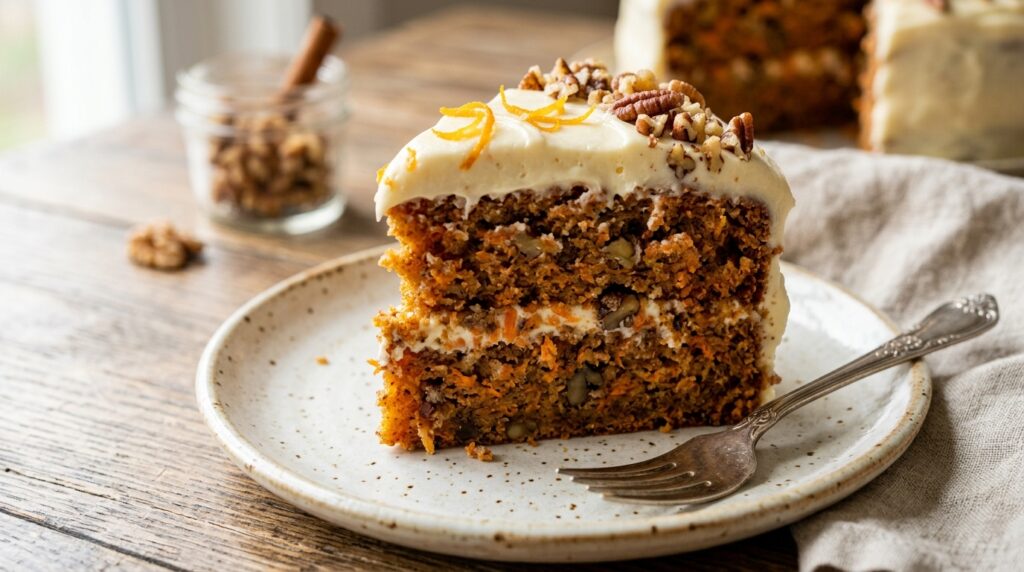
There are few cakes as timelessly beloved as a good carrot cake. Warmly spiced, incredibly moist, and finished with a tangy cream cheese frosting, carrot cake is one of those desserts that manages to feel both indulgent and wholesome at the same time. Whether you're baking it for Easter, a birthday, a family gathering, or simply because you're craving something sweet and homemade, this recipe delivers a bakery-quality result every single time.
In this guide you will find a foolproof classic carrot cake recipe with step-by-step instructions, tips for getting the moistest crumb possible, a fluffy cream cheese frosting recipe, common mistakes to avoid, and a few fun variations to try once you have mastered the basics.
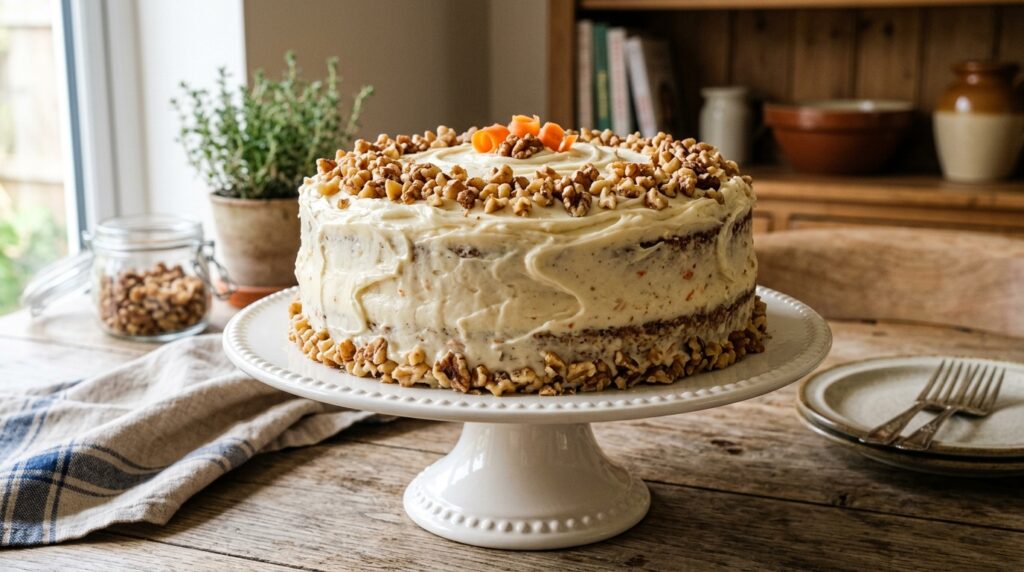
A truly great carrot cake has a few defining qualities: a soft, dense-but-not-heavy crumb, a warm spiced flavor from cinnamon and nutmeg, plenty of freshly grated carrots for natural sweetness and moisture, and a thick, creamy, tangy cream cheese frosting that balances out the sweetness of the cake. The good news is that all of this is completely achievable at home with simple, easy-to-find ingredients.
Preheat your oven to 350°F (175°C). Grease two 9-inch round cake pans with butter or non-stick spray and line the bottoms with parchment paper circles. This ensures the cakes release cleanly without sticking.
In a large bowl, whisk together the flour, baking powder, baking soda, salt, cinnamon, nutmeg, and ginger until well combined. Set aside.
In a separate large bowl, whisk together the granulated sugar, brown sugar, and vegetable oil until combined. Add the eggs one at a time, whisking well after each addition. Stir in the vanilla extract and yogurt (or sour cream).
Pour the wet ingredients into the dry ingredients and fold gently with a spatula until just combined. Do not overmix — stop as soon as the flour disappears and the batter is smooth.

Fold in the freshly grated carrots, and if using, the chopped walnuts or pecans and raisins. The batter will be thick — that is completely normal and exactly what you want.
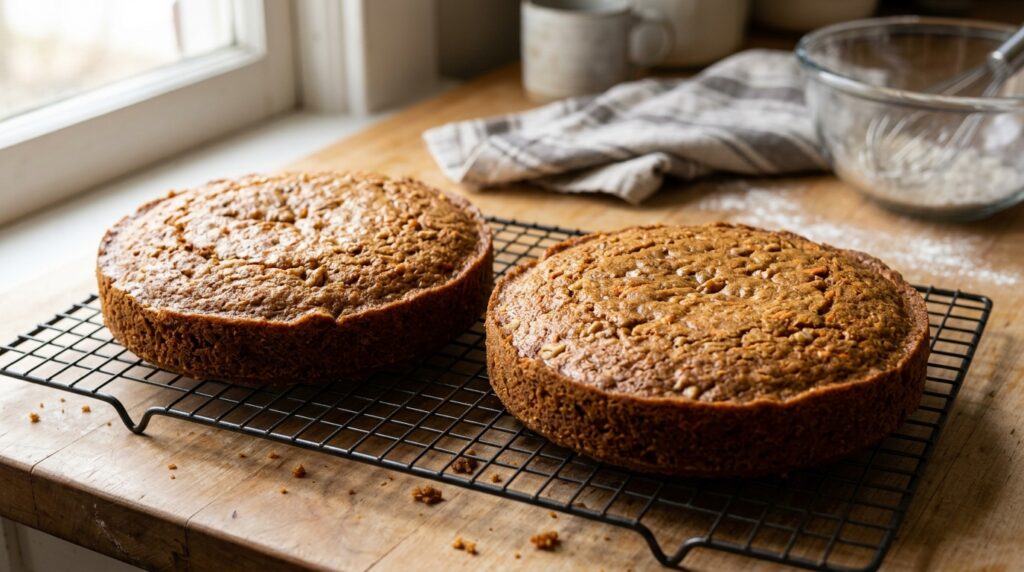
Divide the batter evenly between the two prepared cake pans and smooth the tops with a spatula. Bake for 30–35 minutes, or until a toothpick inserted into the center comes out clean and the tops spring back lightly when pressed. If the tops are browning too quickly, loosely tent them with foil for the last 10 minutes.
Let the cakes cool in their pans for 15 minutes, then turn them out onto a wire rack and allow them to cool completely before frosting. This step is essential — frosting a warm cake will cause the cream cheese frosting to melt and slide right off.
In a large bowl, beat the softened cream cheese and butter together with a hand mixer or stand mixer on medium speed for about 2–3 minutes, until light, smooth, and creamy. Reduce the speed to low and gradually add the sifted powdered sugar, one cup at a time, beating until fully incorporated after each addition. Add the vanilla extract and a pinch of salt, then increase the speed to medium-high and beat for another 1–2 minutes, until the frosting is fluffy and spreadable. If the frosting is too thick, add a tablespoon of milk at a time to loosen it. If it's too thin, add a little more powdered sugar.
Place one cooled cake layer on a serving plate or cake stand. Spread a generous, even layer of cream cheese frosting over the top. Place the second cake layer on top and press gently. Apply a thin crumb coat of frosting all over the outside of the cake (this seals in any loose crumbs) and refrigerate for 15 minutes to set. Then apply the final layer of frosting to the top and sides, smoothing it with an offset spatula or the back of a spoon.
Garnish the top of the cake with a handful of chopped walnuts, pecan halves, or even a light dusting of cinnamon for a beautiful finishing touch. Slice and serve at room temperature for the best texture and flavor.
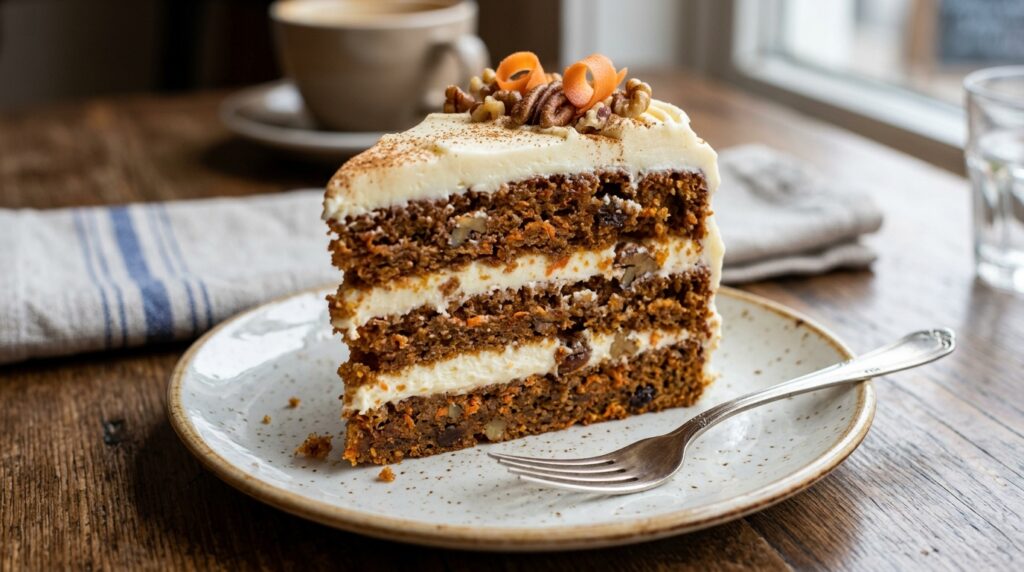
Room temperature: Carrot cake can sit at room temperature for up to 2 hours when serving, but because of the cream cheese frosting, it should be refrigerated otherwise. Refrigerator: Store the cake covered in the refrigerator for up to 5 days. Let slices sit at room temperature for 20–30 minutes before eating for the best flavor and texture. Freezer (unfrosted layers): Wrap cooled, unfrosted cake layers tightly in plastic wrap and then in foil, and freeze for up to 3 months. Thaw overnight in the refrigerator before frosting and serving. Freezer (frosted slices): Place individual frosted slices on a baking sheet and freeze until solid, then wrap individually and store in a freezer bag for up to 2 months.
Can I make this cake in advance? Yes — this cake actually tastes even better the next day as the spices deepen and the moisture from the carrots settles into the crumb. Bake the layers, cool completely, wrap tightly, and store at room temperature for up to 1 day or in the refrigerator for up to 2 days before frosting and serving.
Can I substitute the oil with butter? You can, but oil produces a noticeably moister cake than melted butter because oil stays liquid at room temperature while butter solidifies. If you prefer a slightly denser, more buttery flavor, substitute melted butter at a 1:1 ratio.
Can I make this gluten-free? Yes — substitute a 1:1 gluten-free flour blend for the all-purpose flour. The texture may be very slightly denser but still delicious.
Do I have to use two pans? No — you can bake this as a single-layer cake in a 9x13-inch pan, as noted in the variations section above. It skips the stacking step and is great for larger gatherings.
Why is my cream cheese frosting runny? This usually happens if the cream cheese or butter was too warm before beating. Make sure both are softened but still cool to the touch, not melted or greasy. If your frosting is already runny, pop it in the fridge for 20–30 minutes and then beat again before using.
This carrot cake recipe is the kind of recipe you make once and then keep coming back to for every occasion that calls for something homemade and special. Moist, warmly spiced, and finished with a rich and tangy cream cheese frosting, it truly has everything you could want in a classic cake. Whether you go with the traditional two-layer version, bake it as cupcakes, or stir in some pineapple or coconut for a twist, this recipe is guaranteed to become a favorite in your home.
Did you make this recipe? Leave a comment below and let me know how it turned out!