

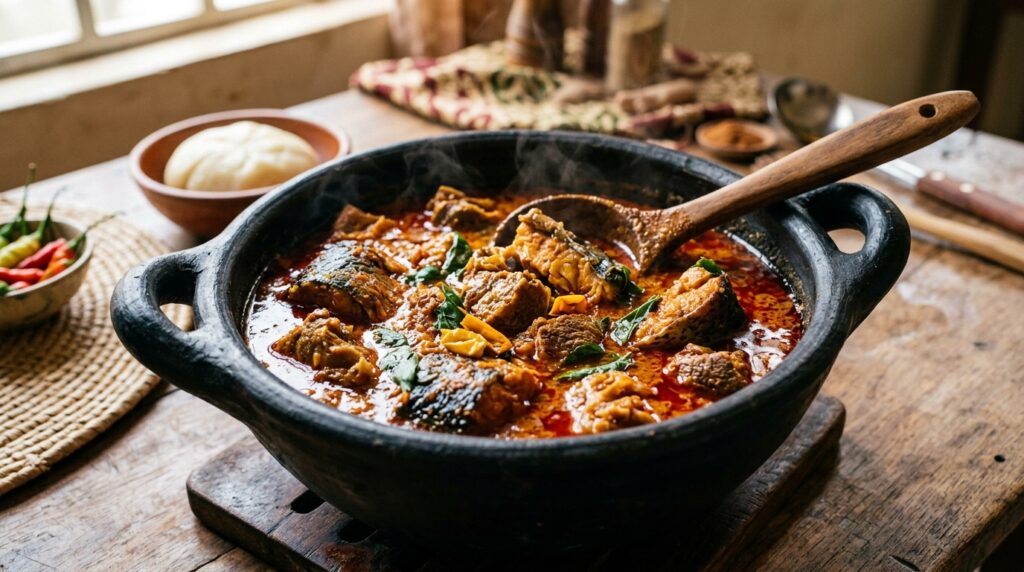
Banga soup is one of the crown jewels of Nigerian cuisine, especially beloved in the Niger Delta region where it originates. Made from the rich, creamy extract of palm fruit and infused with a unique blend of aromatic native spices, banga soup delivers a flavor experience unlike any other Nigerian soup — earthy, nutty, fragrant, and, in this version, delightfully spicy with a good kick of pepper that warms you from the first spoonful to the last.
Traditionally paired with starch (usi), pounded yam, or eba, banga soup is a dish that feels both festive and comforting. While it may look intimidating with its distinct spice blend and palm fruit base, this comprehensive guide breaks everything down into clear, simple steps so you can make an authentic, restaurant-quality pot of spicy banga soup right in your own kitchen — whether you are starting with fresh palm fruits or a tin of ready-made palm fruit concentrate.
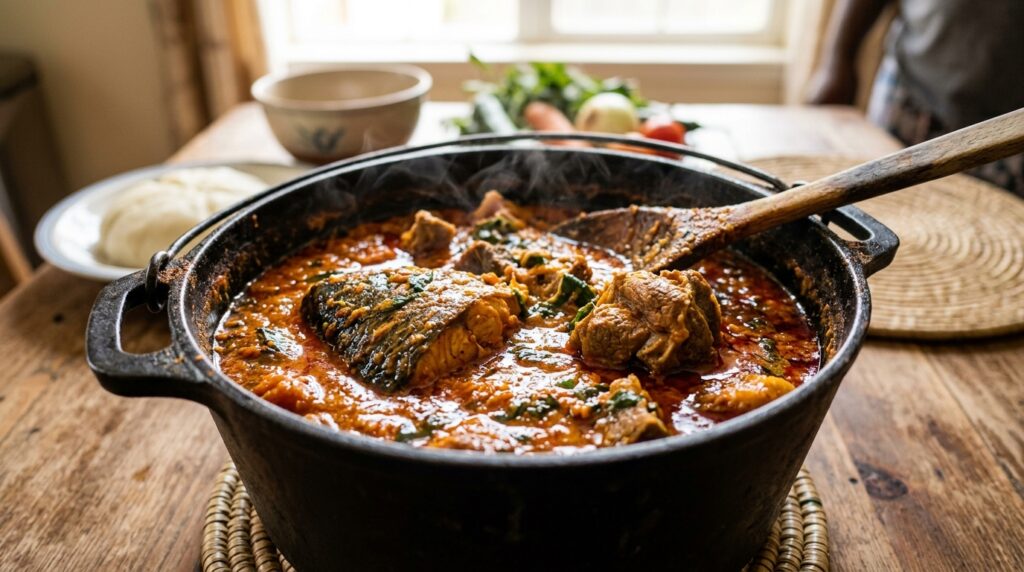
Banga soup, also known as ofe akwu in Igbo or obe eyin in Yoruba (with regional differences in preparation), is a soup made from the extract of boiled and pressed palm fruits. The Delta-style banga soup, which this recipe follows, is distinguished by its signature spice blend — a combination of native spices like ataiko, irugege, oburunbebe stick, and beletete leaves — which gives the soup its unmistakable aroma and depth.
What makes banga soup truly special is the palm fruit extract itself: creamy, naturally rich, and full-bodied, it forms a luscious base that carries the flavors of fresh fish, meats, and spices beautifully. The Delta version is most famously enjoyed with fresh catfish and served alongside starch, though it is equally delicious with beef, dried fish, or a combination of proteins.
Wash the fresh palm fruits thoroughly and place them in a large pot. Cover with water and boil for 20–30 minutes, until the fruits are soft and the skin gives easily when pressed. Drain the fruits and transfer them to a mortar. Pound gently with a pestle — you want to loosen the pulp from the nuts, not crack the kernels. Once the pulp is well separated, transfer everything to a large bowl and add about 3–4 cups of warm water. Use your hands to squeeze and massage the pulp thoroughly, separating the fibrous strands and nuts from the creamy extract. Strain the mixture through a sieve into a clean bowl, pressing down to extract as much of the rich, creamy liquid as possible. Discard the nuts and fiber. You should have a thick, orange-red palm cream. If using canned palm fruit concentrate, simply open the tin and dilute it with about 1–2 cups of warm water, stirring until smooth, and skip straight to Step 2.
Pour the palm fruit extract into a large, heavy-bottomed pot and place it over medium-high heat. Bring it to a boil, uncovered, and let it cook for about 15–20 minutes, stirring occasionally. During this time, the extract will thicken slightly and natural palm oil will begin to rise and float on the surface — this is exactly what you want. The soup base should reduce and deepen in color and flavor.
Add the chopped onion, blended scotch bonnet peppers, ground dried pepper (if using for extra heat), ground crayfish, seasoning cubes, and the banga spice blend (or your individual ground ataiko and irugege). If you have an oburunbebe stick, drop it into the pot now — it will infuse the soup with its distinctive smoky, aromatic flavor as it cooks. Stir everything together and let the soup simmer for another 10 minutes so the spices can fully bloom and infuse the palm fruit base.
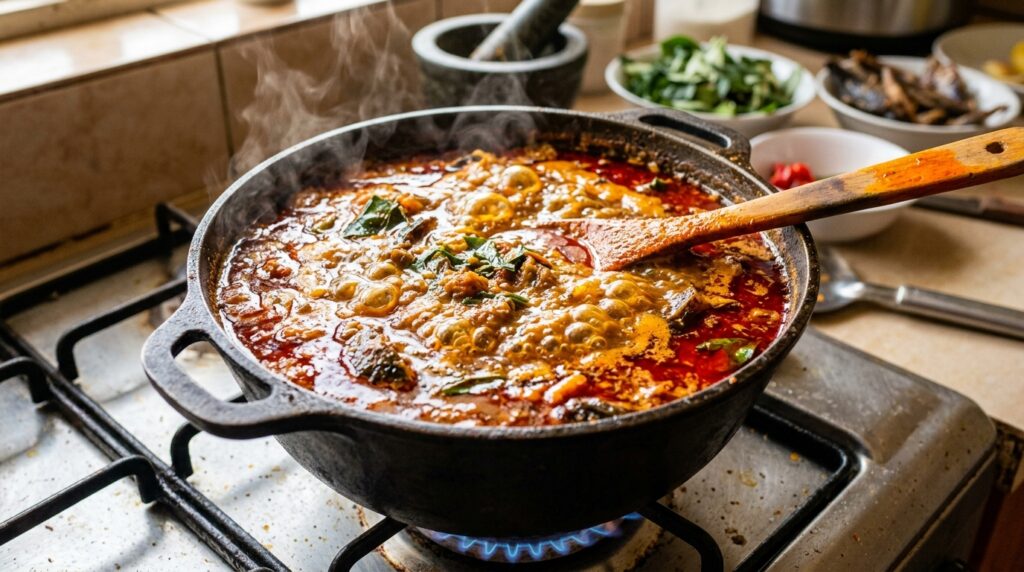
If you are using beef or goat meat, it should be pre-cooked until tender with onion, salt, and a seasoning cube (just as you would for any Nigerian soup), then added to the pot at this stage along with its stock. Add the cleaned dried or smoked fish as well. Stir gently and let everything simmer together for 10 minutes so the proteins absorb the rich banga flavors.
Gently place the fresh catfish steaks into the simmering soup, arranging them so they are mostly submerged. Do not stir vigorously from this point onward — catfish is delicate and will break apart if handled roughly. Instead, gently shake the pot from side to side occasionally to move things around. Cover and cook for 10–15 minutes, until the catfish is cooked through, firm, and opaque.

Sprinkle in the crushed beletete leaves (or your substitute of dried bitter leaf or scent leaves) and gently shake the pot to distribute them. Taste the soup and adjust the salt, seasoning, and pepper to your preference — this is your moment to push the heat level up if you want it truly spicy. Let the soup simmer for a final 5 minutes. The finished soup should be rich, slightly thick, with a layer of natural palm oil glistening on the surface and a bold, spicy, aromatic flavor.
If you used an oburunbebe stick, fish it out and discard it. Your spicy banga soup is ready. Serve it hot with starch (usi), pounded yam, eba, fufu, or semo, making sure each serving gets a generous piece of catfish and plenty of that rich, spicy broth.
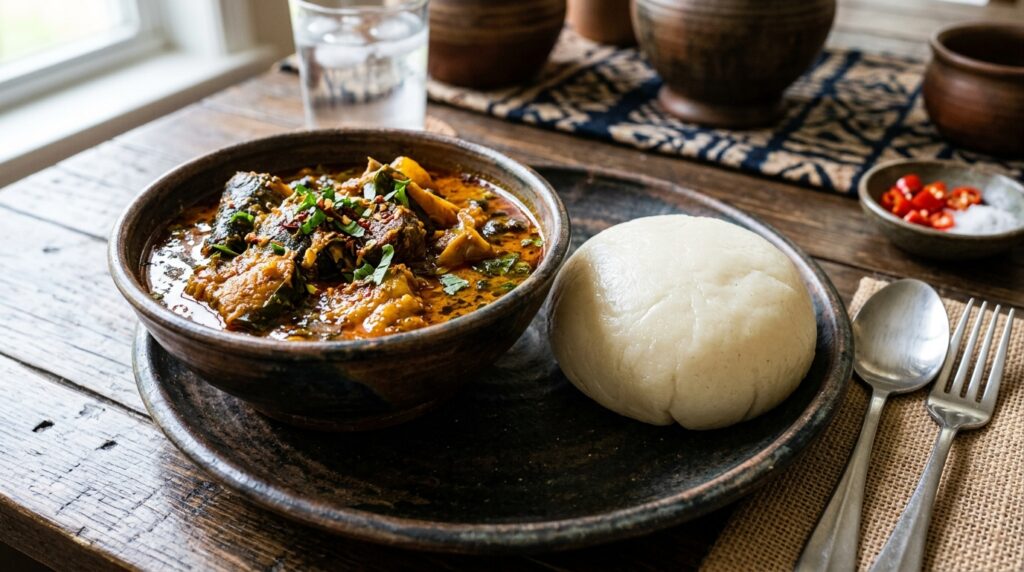
Starch (Usi) — The most traditional Delta pairing. This smooth, stretchy, yellow-orange swallow made from cassava starch is the classic companion to banga soup. Pounded Yam — Smooth and neutral, pounded yam lets the bold, spicy flavors of the soup shine. Eba (Garri) — A firm, slightly tangy swallow that holds up beautifully to the rich soup. Fufu — Soft, doughy, and mild, a reliable pairing for any rich Nigerian soup. Semovita (Semo) — Light and smooth, an easy everyday option. White Rice — Especially if you lean toward the ofe akwu style, banga served over rice is deeply satisfying.
Refrigerator: Allow the soup to cool completely, then store in an airtight container in the refrigerator for up to 3–4 days. The flavors actually deepen overnight, and many people swear banga soup tastes even better the next day. Freezer: Banga soup freezes well for up to 2 months. If possible, freeze the soup before adding fresh catfish, and add the fish fresh when reheating for the best texture. Reheating: Reheat gently on the stovetop over medium-low heat, shaking the pot rather than stirring if there is catfish in it, and adding a small splash of water if the soup has thickened too much.
Where can I buy palm fruits or palm fruit concentrate? Fresh palm fruits are available at most Nigerian and West African markets. If you are outside Africa, canned palm fruit concentrate (often labeled "palm nut cream" or "sauce graine") is widely available at African and international grocery stores and online.
What can I use if I can't find the native banga spices? Ready-made banga spice mixes are sold at most African stores and online, which is the easiest option. If you truly cannot find them, you can still make a delicious (if less traditional) palm nut soup using crayfish, pepper, and dried scent leaves or bitter leaf — but the signature Delta aroma comes from the authentic spice blend, so it is worth seeking out.
Is banga soup the same as ofe akwu? They share the same palm fruit extract base but differ in seasoning and serving style. Delta-style banga soup uses the native banga spice blend and is served with starch or swallow, while Igbo-style ofe akwu is seasoned with scent leaves and is traditionally served over boiled white rice.
How spicy is this recipe? As written with 2–4 scotch bonnets, it delivers a solid, warming heat. The beauty of making it yourself is complete control — scale the pepper down to one scotch bonnet for a mild version, or push it up with extra ground dried pepper if you like your soup fiery.
Can I make banga soup without fish? Yes — an all-meat banga soup with beef, goat meat, shaki, and ponmo is very popular and equally delicious. Simply cook your meats until tender and build the soup exactly as described, skipping the catfish step.
Why is my banga soup watery? Either the palm fruit extract was diluted with too much water during extraction, or the base was not reduced long enough before the proteins were added. Let the soup simmer uncovered until it thickens and the oil rises to the surface.
Spicy banga soup is a true celebration of Niger Delta cooking — rich, aromatic, boldly spiced, and deeply comforting. While the ingredient list may look unfamiliar at first, the process itself is straightforward, and the reward is a pot of soup with a depth of flavor that simply cannot be replicated by any shortcut. Whether you serve it the traditional way with starch and fresh catfish or put your own spin on it with assorted meats and extra pepper, this is a recipe that brings people to the table and keeps them coming back for more.
Did you make this recipe? Leave a comment below and let me know how it turned out!