

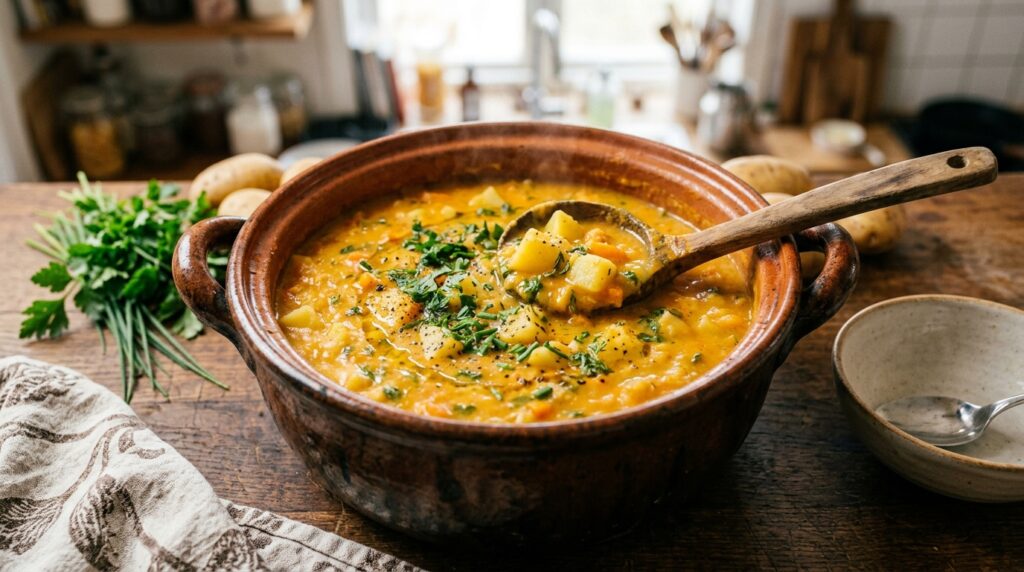
Potato porridge is one of those wonderfully comforting one-pot meals that Nigerian home cooking does so well. Think of it as the potato cousin of the beloved yam porridge (asaro) — chunks of tender potato simmered in a rich, peppery palm oil sauce with crayfish, smoked fish, and fresh leafy greens, with some of the potato deliberately mashed into the sauce to create that signature thick, creamy, porridge-like consistency. It is hearty, affordable, quick to make, and endlessly satisfying.
Whether you are using Irish potatoes or sweet potatoes, this dish comes together in well under an hour with simple, everyday ingredients, making it perfect for weeknight dinners, weekend lunches, and everything in between. In this comprehensive guide, you will find the full ingredient list, detailed step-by-step instructions, tips for getting the perfect porridge consistency, common mistakes to avoid, delicious variations to try, and answers to the most frequently asked questions.
Potato porridge (sometimes called potato pottage) is a one-pot Nigerian dish in which potatoes are cooked directly in a seasoned palm oil and pepper sauce until tender, with a portion of the potatoes mashed into the liquid to naturally thicken it. The result sits somewhere beautifully between a stew and a mash — chunky, saucy, rich, and deeply flavored.
It follows the same beloved formula as yam porridge (asaro) and plantain porridge, and like those dishes, it is a complete meal in one pot: carbohydrates from the potatoes, protein from smoked fish (or meat, if you like), healthy fats from palm oil, and vitamins from the leafy greens stirred in at the end. It is also naturally flexible — you can make it with Irish potatoes for a softer, creamier porridge or sweet potatoes for a subtly sweet version that pairs beautifully with the peppery sauce.
Peel the potatoes and cut them into large, evenly sized chunks — roughly 2-inch pieces. Even sizing matters because it ensures all the pieces cook through at the same rate. Rinse the chunks in cold water and set aside. If using sweet potatoes, keep the chunks slightly larger, as sweet potatoes soften faster than Irish potatoes.
Blend the red bell peppers, scotch bonnet peppers, and tomatoes (if using) together until smooth. You should have about 1½ to 2 cups of pepper blend. Set aside.
Place a large, heavy-bottomed pot over medium heat and add the palm oil. Let it warm gently for about a minute — do not bleach it. Add the chopped onion and fry for 2–3 minutes until soft and fragrant. Pour in the blended pepper mixture and fry for 8–10 minutes, stirring occasionally, until the raw pepper smell cooks out and the base thickens slightly.

Add the ground crayfish, seasoning cubes, salt, and thyme (if using). Stir well and let the seasonings fry in the base for about 2 minutes to release their full flavor. If you are using pre-cooked meat, add it now along with a splash of its stock.
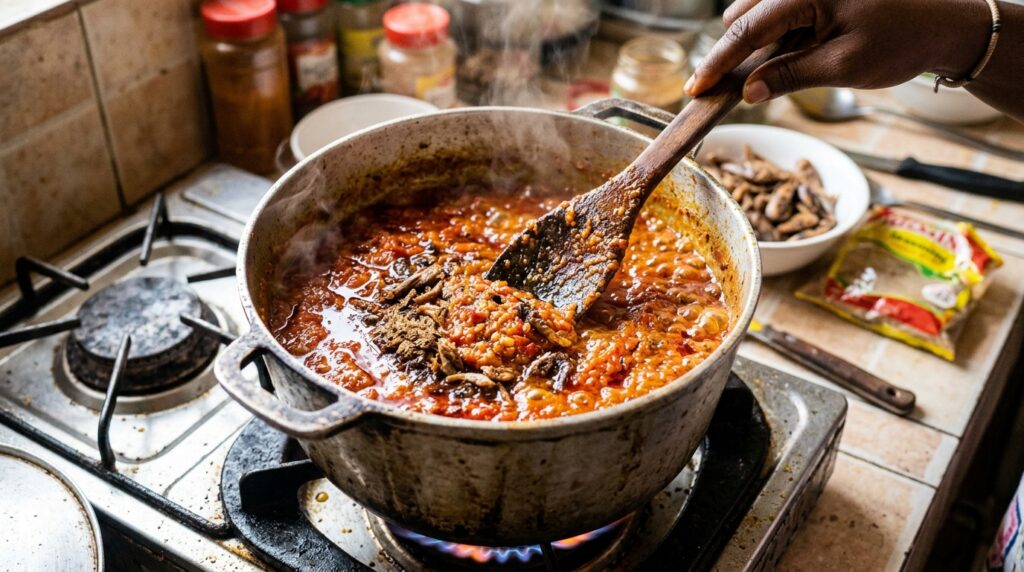
Add the potato chunks to the pot and stir gently so every piece is coated in the rich pepper base. Pour in enough water or light stock to almost — but not completely — cover the potatoes; about 3 to 4 cups depending on your pot. The potatoes should peek just above the liquid. Resist adding more water than this — the porridge thickens itself as it cooks, and too much liquid at this stage is the most common cause of a watery pot.
Cover the pot and cook over medium heat for 15–20 minutes, until the potatoes are fork-tender. Check occasionally and give the pot a gentle stir from the bottom to prevent sticking, but avoid over-stirring, which breaks the chunks apart too early. Add the smoked or dried fish about halfway through this stage so it warms through and infuses the porridge with its smoky depth without disintegrating.
Once the potatoes are tender, use the back of your wooden spoon to deliberately mash about a quarter to a third of the potato chunks against the side of the pot, stirring the mash back into the liquid. This is the step that transforms the dish from potatoes-in-sauce into true porridge — the mashed potato dissolves into the cooking liquid and thickens it into a creamy, luscious consistency. Mash more for a thicker, creamier porridge or less if you prefer it chunkier and saucier. Let the pot simmer uncovered for 3–5 minutes so the consistency comes together.
Taste the porridge and adjust the salt and seasoning one final time. Add the shredded spinach, ugu, or scent leaves and stir them in gently. Cook for a final 2–3 minutes, just until the greens are wilted but still bright and vibrant. Turn off the heat immediately — the residual heat will finish the greens perfectly.
Your potato porridge is ready. Serve it hot in generous bowls, on its own as a complete meal, or with a side of fried fish, grilled chicken, or a boiled egg on top for extra protein.
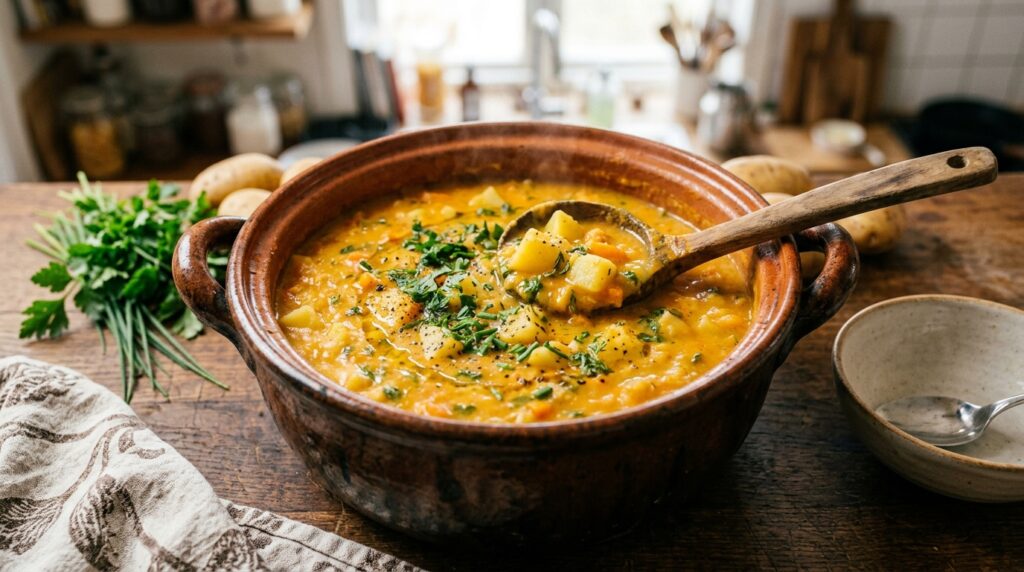
Potato porridge is a complete one-pot meal on its own, but these pairings take it to another level:
Fried or Grilled Fish — Croaker, tilapia, or mackerel perched on top of a steaming bowl is a classic combination. Boiled Eggs — A simple, protein-rich topping that never fails. Peppered Chicken or Beef — For a heartier, celebratory plate. A Cold Drink — In true Nigerian fashion, a chilled soft drink or zobo alongside a hot bowl of porridge is pure comfort.
Refrigerator: Allow the porridge to cool completely, then store in an airtight container for up to 3 days. It will thicken considerably in the fridge — this is normal. Freezer: Potato porridge freezes reasonably well for up to 2 months, though the potato texture softens slightly after thawing. Freeze in portions for quick meals. Reheating: Reheat gently on the stovetop over medium-low heat with a splash of water to loosen it back to your preferred consistency, stirring occasionally. Individual portions can be microwaved, covered, for 2–3 minutes with a spoonful of water added.
Should I use Irish potatoes or sweet potatoes? Both work beautifully, and it comes down to preference. Irish potatoes give a softer, creamier, more neutral porridge that lets the pepper base shine, while sweet potatoes add a gentle natural sweetness that plays wonderfully against the heat of the scotch bonnet. Many cooks alternate between the two depending on what is in the market.
Why is my porridge watery? Too much water was added at the cooking stage, or not enough potato was mashed in. Fix it by mashing a few more chunks into the liquid and simmering uncovered for a few extra minutes until it thickens.
Why did my porridge turn completely mushy? The potatoes were overcooked before the mashing stage, or the pot was stirred too aggressively. Cook just to fork-tender and stir gently — the goal is a creamy sauce with distinct chunks throughout.
Can I make potato porridge without palm oil? Palm oil provides the classic color and flavor, and it is strongly recommended for the authentic taste. In a pinch, vegetable oil with a teaspoon of paprika will approximate the color, but the flavor will be noticeably different.
Is potato porridge the same as asaro? It is the same style of dish — asaro is the beloved Yoruba yam porridge, and potato porridge simply swaps the yam for Irish or sweet potatoes. The technique, the palm oil pepper base, and the partial-mashing method are essentially identical, which is why potato porridge is often described as the quicker, more affordable cousin of asaro.
Can I add vegetables other than spinach or ugu? Absolutely — kale (finely shredded), green amaranth (efo tete), or scent leaves all work wonderfully. Just remember the golden rule: whatever green you choose goes in during the final two to three minutes only.
Potato porridge is everything a great one-pot meal should be — quick, affordable, deeply flavorful, and endlessly adaptable. Once you master the simple rhythm of this dish — fry the base well, go easy on the water, mash just enough to thicken, and finish with fresh greens — you will find yourself coming back to it week after week. Make a generous pot, top it with a piece of fried fish, and enjoy one of Nigerian home cooking's most underrated comfort foods.
Did you make this recipe? Leave a comment below and let me know how it turned out!