

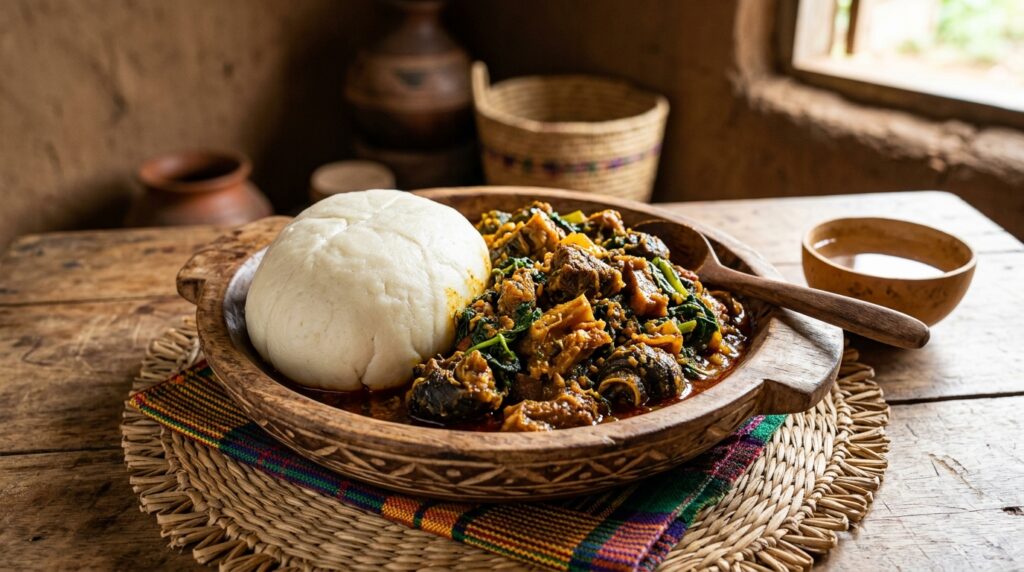
Ofe Owerri is not just a soup — it is a statement. Hailing from Owerri, the capital of Imo State in southeastern Nigeria, this legendary soup is widely regarded as one of the most prestigious dishes in Igbo cuisine. Traditionally reserved for special occasions, honored guests, and celebrations, Ofe Owerri earned its reputation through its luxurious combination of assorted meats, stockfish, dried fish, and snails, all brought together in a rich, cocoyam-thickened broth fragrant with uziza and okazi leaves.
There is a popular saying that Ofe Owerri is the soup of the wealthy — historically, the sheer variety and quantity of proteins that go into a proper pot made it a dish that announced abundance. But here is the good news: while it may sound elaborate, the actual cooking process is straightforward and completely achievable in any home kitchen. This comprehensive guide walks you through every step — from preparing the cocoyam thickener to layering the proteins and finishing with the signature leaves — along with tips, common mistakes to avoid, variations, and answers to frequently asked questions. By the end, you will be able to make a pot of Ofe Owerri worthy of its royal reputation.
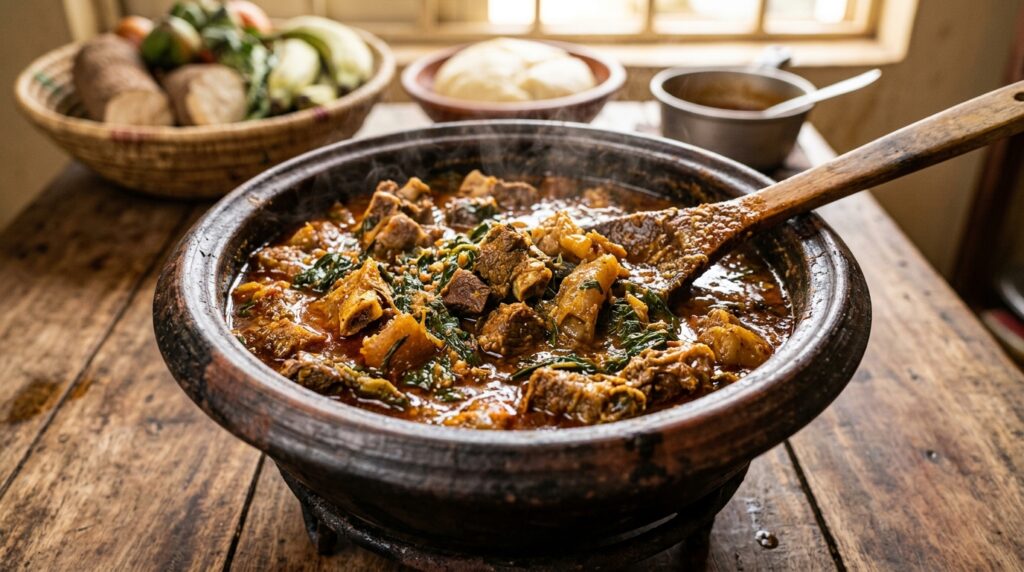
Ofe Owerri (literally "Owerri soup" in Igbo) is a thick, hearty soup distinguished by three defining features. First, its generous variety of proteins — a proper pot traditionally contains assorted beef cuts, shaki (tripe), ponmo (cow skin), stockfish, dried fish, and snails, with some cooks adding goat meat or fresh fish. Second, its thickener — boiled and pounded cocoyam (ede), which dissolves into the broth to create a smooth, luscious body (achi powder is a common modern shortcut). Third, its signature vegetables — a combination of uziza leaves, with their gentle peppery heat, and okazi (also called ukazi or afang) leaves, which bring a distinctive, slightly tough texture and earthy flavor. Some versions include ugu (fluted pumpkin leaves) as well.
The result is a deeply savory, subtly spicy, beautifully thick soup that pairs perfectly with pounded yam, the traditional companion of choice in Owerri households.
Wash all the meats thoroughly under cold running water. Place the toughest cuts — shaki, ponmo, and goat meat if using — in a large pot with the chopped onion, seasoning cube, and salt, and add just enough water to cover. Cook over medium-high heat for about 20 minutes, then add the softer beef cuts and the stockfish. Continue cooking for another 25–30 minutes, until everything is tender and the stockfish has softened. If using snails, wash them thoroughly with alum or lime and salt to remove the slime, then add them in the last 15 minutes of cooking. Once done, keep the meats in their stock — you will build the soup directly on this flavorful base.
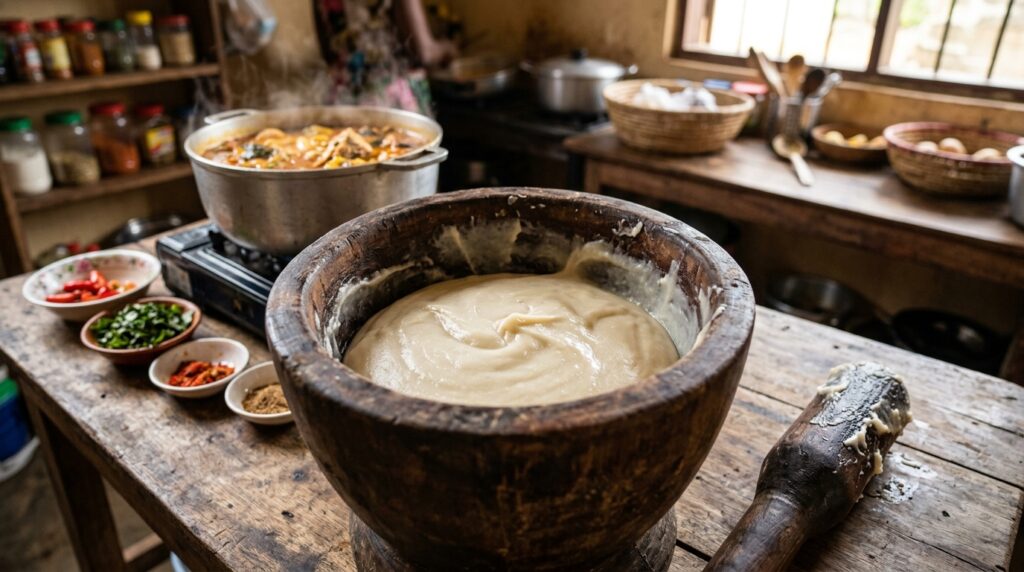
While the meat cooks, wash the cocoyams and boil them (skin on) in a separate pot of water for 20–30 minutes, until very soft — a knife should slide through with no resistance. Drain, allow to cool slightly, then peel off the skins. Pound the peeled cocoyams in a mortar until completely smooth and stretchy, with no lumps remaining. This smooth paste is your traditional thickener. If using achi powder instead, simply mix it with a little cool water into a smooth slurry and set aside — you will add it directly to the pot later.
Return the pot of meats and stock to medium heat, adding extra water if needed so you have about 3–4 cups of liquid. Add the ground crayfish, blended scotch bonnet peppers, ground dried pepper (if using), and seasoning cubes. Stir gently and let everything simmer together for about 10 minutes so the broth becomes deeply seasoned. Add the dried or smoked fish at this stage, handling it gently so it stays in nice chunks.
Pour the palm oil directly into the simmering pot and stir. Allow the soup to cook for about 5 minutes so the oil integrates into the broth, tinting it a rich reddish-orange and adding its signature flavor.

Take small lumps of the pounded cocoyam paste and drop them into the simmering soup, spacing them around the pot. Do not stir immediately — cover the pot and allow the soup to simmer for about 10 minutes so the heat gradually dissolves the cocoyam lumps into the broth. After 10 minutes, stir gently. The soup should be visibly thickening into a smooth, luscious consistency. If some lumps remain, let it simmer a few minutes longer and stir again — they will dissolve. If using achi slurry instead, stir it in gradually and simmer for 5–7 minutes until the soup thickens. Adjust the consistency with extra stock if it becomes thicker than you like — Ofe Owerri should be thick and hearty, but still spoonable.
Add the thinly sliced okazi leaves first — they are the toughest of the greens and need the most cooking time. Stir them in and let the soup simmer for about 5–7 minutes, until the okazi softens slightly while keeping its characteristic bite.
Add the sliced uziza leaves (and shredded ugu, if using) to the pot. Stir gently, taste the soup, and adjust the salt and seasoning one final time. Let it simmer for a final 3–5 minutes — just enough for the uziza to release its gentle peppery aroma into the soup while the greens stay vibrant. Turn off the heat.
Your Ofe Owerri is ready. Serve it piping hot with pounded yam — the classic and undisputed pairing — or with eba, fufu, or semo. Make sure every serving carries a proud share of the assorted meats, stockfish, fish, and snails, because in Owerri, the generosity of the pot is the whole point.
Pounded Yam — The one true classic pairing. In Owerri, Ofe Owerri and pounded yam are practically inseparable. Eba (Garri) — Firm and slightly tangy, a beloved everyday companion. Fufu (Akpu) — Soft, doughy cassava fufu is another traditional Igbo favorite with this soup. Semovita (Semo) — Smooth and light, a convenient modern option. Wheat Swallow — A popular lighter alternative in many homes today.
Refrigerator: Allow the soup to cool completely, then store in an airtight container for up to 4 days. Like most thickened Nigerian soups, the flavor deepens beautifully by the next day. Freezer: Ofe Owerri freezes well for up to 2 months. Portion before freezing so you only thaw what you need. The cocoyam thickening holds up well after thawing. Reheating: Reheat gently on the stovetop over medium-low heat, adding a small splash of water or stock to loosen the soup as it will have thickened in storage. Stir gently to avoid breaking up the fish and meats.
Why is Ofe Owerri called the soup of the rich? Because a traditional pot contains an unusually generous variety of expensive proteins — assorted beef, shaki, ponmo, stockfish, dried fish, and snails all in one soup. Historically, serving Ofe Owerri was a display of abundance and a way of honoring guests, which earned it its prestigious reputation across Igboland.
Can I make Ofe Owerri without cocoyam? Yes — achi powder is the most common substitute and is used widely today for convenience. Ofor powder also works. Mix either into a smooth slurry with cool water and stir it into the simmering soup. The texture will be slightly different from cocoyam but still rich and thick.
Where can I find okazi and uziza leaves? Both are available fresh or dried at Nigerian and African grocery stores, and dried versions are easy to find online. If you are in Nigeria, any major market will have both fresh. Dried okazi should be rinsed and can go straight into the pot; it needs a few extra minutes to soften.
What can I use instead of okazi leaves? There is no perfect substitute for okazi's unique texture, but a mix of thinly sliced kale (for chew) with extra uziza (for aroma) comes closest. Alternatively, make the ugu-and-uziza variation described above.
Are snails compulsory? No — the soup is still wonderful without them. But if you can find and properly clean them, snails are one of the signature touches that make a pot of Ofe Owerri feel truly celebratory.
What is the difference between Ofe Owerri and Ofe Onugbu? Both are thickened Igbo soups, but Ofe Onugbu (bitter leaf soup) is defined by washed bitter leaves and is typically thickened with cocoyam as well, while Ofe Owerri is defined by its okazi-and-uziza leaf combination and its famously lavish assortment of proteins.
Ofe Owerri is a soup with a story — a dish that carries the pride, hospitality, and abundance of Owerri in every spoonful. Yes, it asks for a longer shopping list than the average soup, but the technique itself is simple: tender well-seasoned proteins, a silky cocoyam-thickened broth, and the unmistakable aroma of uziza and okazi added at just the right moments. Make it for a celebration, make it to honor a guest, or make it simply because you deserve a truly special pot of soup. Serve it hot with pounded yam, and you will understand exactly why this soup has held its royal status for generations.
Did you make this recipe? Leave a comment below and let me know how it turned out!