

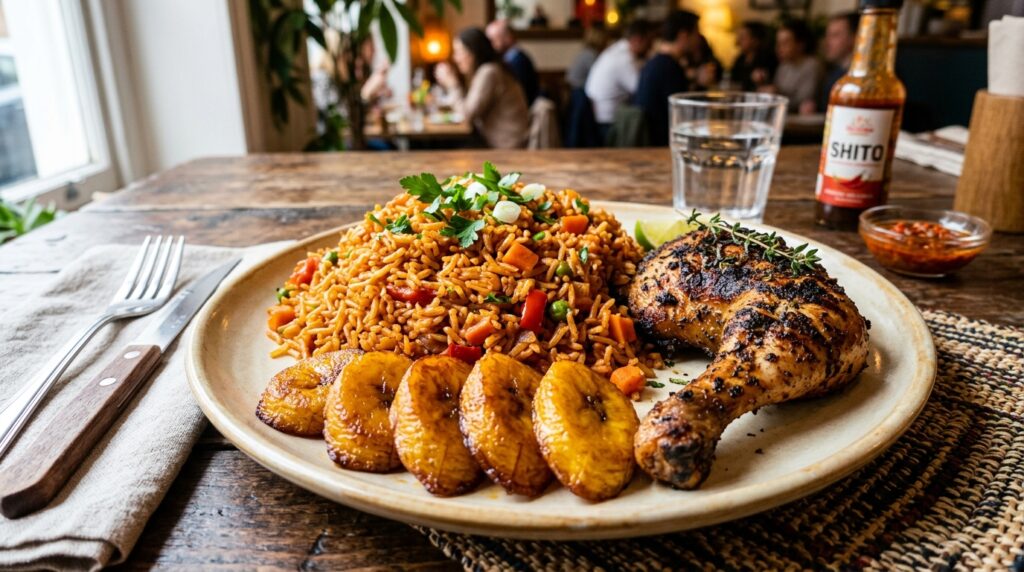
If there is one dish that unites and divides West Africa in equal measure, it is jollof rice. Smoky, rich, vibrant orange-red, and bursting with flavor in every grain, jollof rice is the undisputed king of West African party food — the dish that no Nigerian wedding, birthday, or Sunday gathering is complete without. And at the very top of the jollof hierarchy sits party jollof: that unmistakable smoky-bottomed pot cooked over an open flame that people will happily queue for at any owambe.
The good news is that you do not need a party-sized cauldron or firewood to make jollof rice that tastes like the real deal. With the right technique — a properly fried pepper base, well-seasoned stock, the correct rice-to-liquid ratio, and a little patience at the end for that signature smoky finish — you can make truly exceptional jollof rice on a regular stovetop at home. This comprehensive guide walks you through everything: the full ingredient list, detailed step-by-step instructions, tips for perfect unburnt (or deliberately smoky) grains, common mistakes to avoid, popular variations, and answers to the most frequently asked questions.
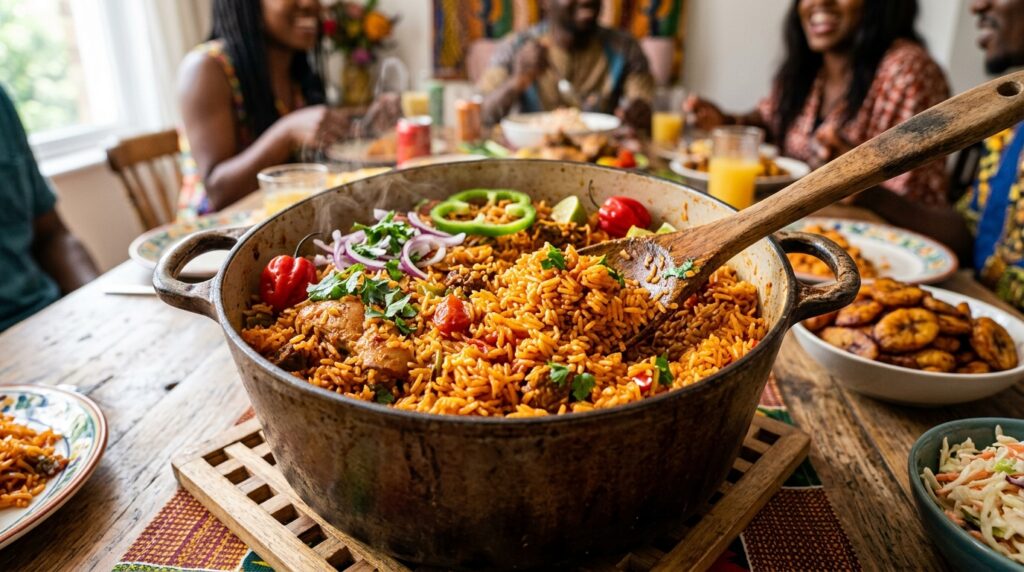
Jollof rice is a one-pot rice dish cooked in a rich, reduced blend of tomatoes, red bell peppers, scotch bonnet peppers, and onions, seasoned with stock, thyme, curry powder, and bay leaves. The rice simmers directly in this flavorful base, absorbing every bit of it until each grain is stained a deep orange-red and packed with flavor.
The dish traces its roots to the Senegambia region (where it is known as thieboudienne) and has spread across West Africa, with Nigeria and Ghana famously locked in an eternal, good-natured rivalry over whose version reigns supreme. This recipe follows the Nigerian style — made with long-grain parboiled rice, a deeply fried pepper base, and finished with that beloved smoky party flavor known as "party jollof."
Wash the tomatoes, red bell peppers, and scotch bonnet peppers. Roughly chop them along with one onion and add everything to a blender. Blend until completely smooth — you should have roughly 4–5 cups of blended pepper mix. Pour the blend into a pot and boil on medium-high heat for about 15–20 minutes, uncovered, to reduce it. You want most of the water content to evaporate, leaving behind a thick, concentrated pepper mix. Reducing the blend before frying is a key step — it shortens the frying time and intensifies the flavor.
Heat the vegetable oil in a large, heavy-bottomed pot over medium heat. Add the sliced onion and fry for 2–3 minutes until soft and fragrant. Add the tomato paste and fry it for about 3–5 minutes, stirring constantly — frying the paste removes its raw, tangy taste and deepens the color of your jollof. Now pour in the reduced pepper blend. Fry the mixture over medium heat, stirring every few minutes to prevent burning, for about 15–20 minutes. The base is ready when it has darkened to a deep red, thickened considerably, and the oil begins to separate and float on the surface. This well-fried base is the foundation of great jollof — do not rush it.
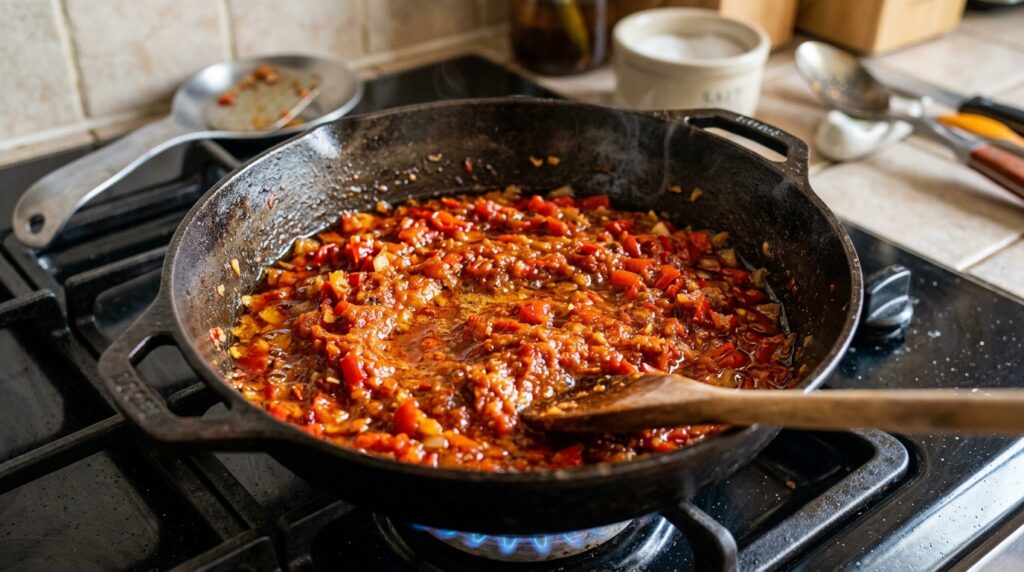
Add the curry powder, thyme, bay leaves, garlic and ginger (if using), seasoning cubes, and salt to the fried pepper base. Stir well and fry for another 2 minutes so the spices bloom in the hot oil and release their full aroma.
Pour in the chicken stock and stir everything together. Bring the mixture to a rolling boil and taste it. This is the most important tasting moment in the entire recipe: the liquid should taste slightly saltier and more intense than you want the final rice to be, because the rice will absorb and mellow the seasoning as it cooks. Adjust with more salt or seasoning cubes as needed.

Wash the parboiled rice in two or three changes of cold water, just enough to rinse off surface starch — do not over-wash. Drain well and add the rice to the boiling pepper stock. Stir once to level the rice and make sure every grain is submerged. The liquid should sit just about level with or barely above the rice — jollof is cooked with less liquid than regular boiled rice because it finishes by steaming.
Reduce the heat to the lowest setting. Cover the rice with a double layer: first a sheet of foil or baking paper pressed down over the pot, then the pot lid. This traps the steam, which is what actually cooks jollof rice properly. Let the rice cook undisturbed on low heat for about 25–30 minutes. Resist the urge to open the pot and stir frequently — excessive stirring breaks the grains and makes the jollof mushy.
After 25–30 minutes, open the pot and check the rice. The grains at the top may still be slightly firm while the bottom is done — this is normal. Using a wooden spatula, gently turn the rice, bringing the bottom layer up to the top. If the rice is still too firm and the pot is dry, sprinkle in a few tablespoons of hot water or stock, re-cover, and steam for another 10 minutes. Repeat gently until the grains are tender, separate, and fully cooked through.
For that authentic party jollof flavor, once the rice is fully cooked, turn the heat up to medium-high for the final 3–5 minutes with the pot covered. You will hear the bottom layer begin to sizzle and toast — this deliberate light burning of the bottom creates the prized smoky aroma that infuses the entire pot. Turn off the heat as soon as you smell that distinct smoky fragrance, and leave the pot covered for 5 more minutes so the smoke perfumes every grain. The toasted bottom layer itself — known affectionately as the "party jollof bottom" — is a delicacy in its own right.
Add the butter (if using) and gently fluff the rice with a wooden spatula, removing the bay leaves as you find them. Garnish with fresh sliced tomatoes and onions if you like. Serve hot with fried plantain (dodo), grilled or fried chicken, beef, fish, moi moi, coleslaw, or a simple side salad.
Fried Plantain (Dodo) — The sweet, caramelized counterpoint that no plate of jollof should be without. Grilled or Fried Chicken — The classic party pairing. Beef or Turkey — Peppered beef or fried turkey wings for a heartier plate. Grilled or Fried Fish — Croaker, tilapia, or mackerel are all wonderful with jollof. Moi Moi — Steamed bean pudding, a beloved traditional companion. Coleslaw or Salad — A cool, crisp contrast to the rich, smoky rice.
Refrigerator: Allow the rice to cool completely, then store in an airtight container for up to 4 days. Freezer: Jollof rice freezes exceptionally well for up to 3 months. Portion it out before freezing for easy weekday meals. Reheating: Sprinkle a tablespoon of water over the rice, cover, and microwave for 2–3 minutes, or reheat gently in a covered pot on low heat. The smoky flavor deepens overnight — many people insist next-day jollof tastes even better.
Why is my jollof rice soggy or mushy? Almost always too much liquid, too much stirring, or the wrong rice. Use parboiled long-grain rice, keep the liquid just level with the rice, seal the pot well, and turn the rice only once or twice with a gentle folding motion.
Why is my jollof rice pale instead of deep orange-red? The pepper base was not fried long enough, or there was not enough tomato paste. A properly fried base — dark red with the oil separated — plus well-fried tomato paste gives jollof its signature color without any need for artificial coloring.
How do I get the smoky party jollof taste at home? Two ways: the high-heat finish described in Step 8, which deliberately toasts the bottom layer to release a smoky aroma into the covered pot, or finishing the covered pot over a charcoal grill for 10 minutes. A few cooks also drop in a piece of smoked fish or use a well-seasoned old pot, which adds depth.
Can I make jollof rice without meat stock? Yes — use water plus an extra seasoning cube and a bit more garlic, ginger, and thyme. The pepper base carries so much flavor that a well-seasoned water-based jollof is still delicious, and it makes the dish fully vegetarian.
What is the difference between Nigerian and Ghanaian jollof? The friendly war of a generation. Broadly: Nigerian jollof uses parboiled long-grain rice and leans on a deeply fried tomato-pepper base with curry powder and thyme, while Ghanaian jollof typically uses jasmine rice and features more ginger and garlic, often with the rice cooked in a slightly soupier base. Both are excellent — though this recipe may quietly suggest a winner.
Can I double this recipe for a party? Yes — the method scales well, but use a wide, heavy-bottomed pot, keep the liquid ratio proportional, and expect the steaming stage to take a little longer. Turn the rice in sections rather than all at once to keep the grains intact.
Great jollof rice is not about secret ingredients — it is about technique. A patiently fried pepper base, boldly seasoned stock, the discipline to use less water than feels safe, a tightly sealed pot on low heat, and that final fearless burst of high heat for the smoky finish. Master those steps and you will turn out party-worthy jollof from an ordinary kitchen stove, every single time. Make a big pot, fry some plantain, invite people you love, and serve the one dish that never, ever has leftovers.
Did you make this recipe? Leave a comment below and let me know how it turned out!