

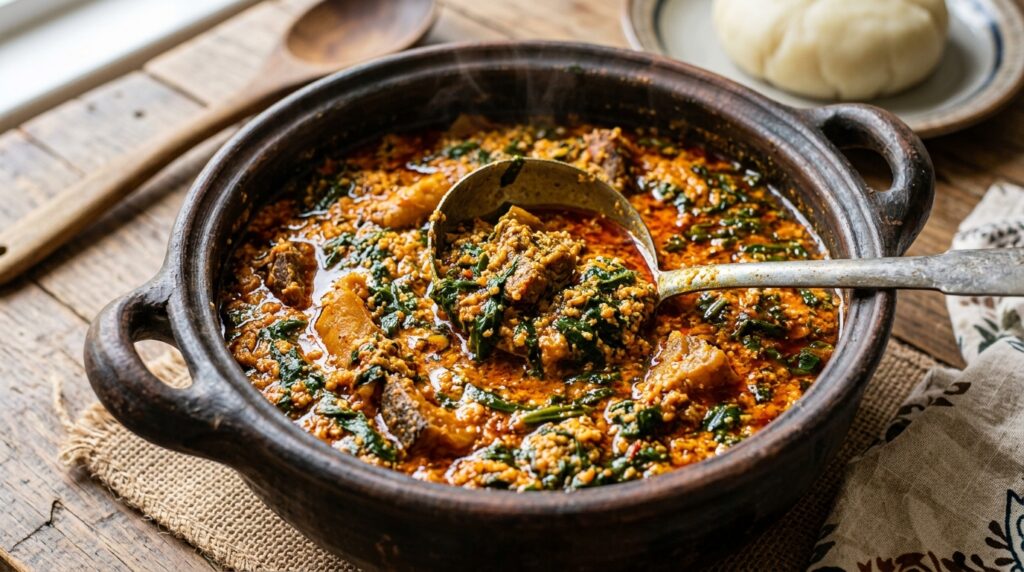
Egusi soup is one of the most beloved and widely enjoyed dishes across West Africa. Rich, hearty, and deeply flavorful, it is a thick, protein-packed soup made from ground melon seeds cooked in a bold palm oil base with leafy greens, assorted meats, and a combination of seasonings that make every pot taste like home. It is a staple in Nigerian, Ghanaian, Beninese, and many other West African households, and once you taste it, it is easy to understand why.
Whether you grew up eating egusi soup or you are discovering it for the first time, this guide will walk you through everything you need to know — from understanding the key ingredients to a foolproof step-by-step cooking method, tips for getting the perfect texture, common mistakes to avoid, and variations to try. By the end of this article, you will be able to make a pot of egusi soup that tastes just like the real thing.
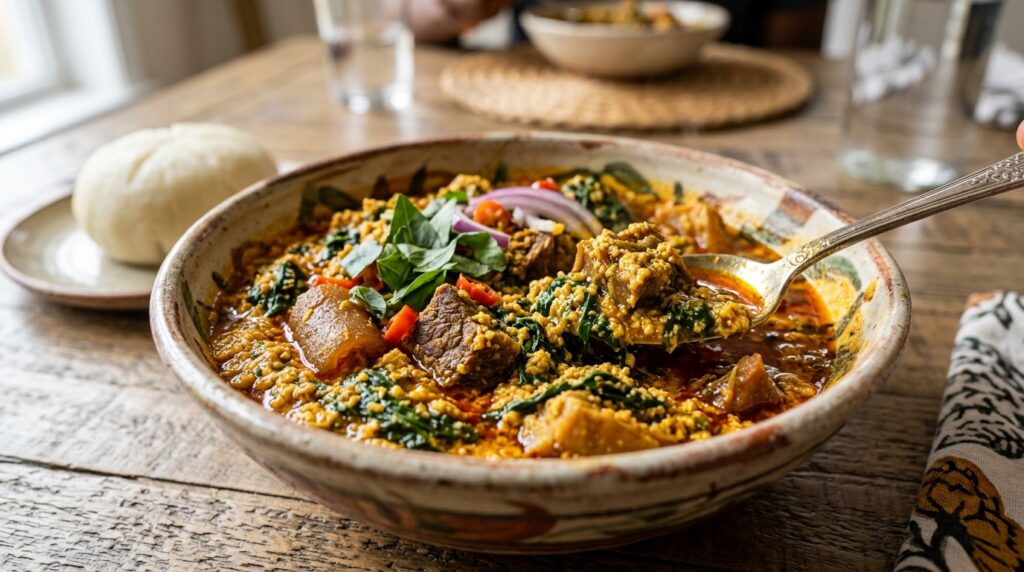
Egusi refers to the dried seeds of certain cucurbit plants — the same family as melons, gourds, and squashes — that are hulled and ground into a coarse or fine powder. When cooked, the ground egusi forms thick, savory clumps that absorb all the flavors of the broth, palm oil, and seasonings around them, giving the soup its signature rich, nutty taste and hearty texture.
Egusi soup is traditionally served with swallow foods — thick, dough-like starches used for scooping — such as pounded yam, fufu, eba (garri), amala, or semo. It can also be eaten with white rice or boiled plantain, making it a wonderfully versatile dish.
Wash the assorted meats thoroughly under cold running water. Place them in a pot and add the chopped onion, seasoning cube, and salt. Add just enough water to barely cover the meat. Cook over medium-high heat for 30–45 minutes, or until the meat is tender. If using stockfish, add it to the pot about 20 minutes into cooking since it takes a little longer to soften. Once the meat is tender, remove it from the pot and set aside, reserving the meat stock. Do not discard the stock — this is liquid gold for flavoring your soup.
Rinse the tomatoes, red bell peppers (tatashe), and scotch bonnet peppers. Add them to a blender along with half of the onion (roughly chopped) and blend until smooth. You can blend to a fine consistency or leave it slightly chunky depending on your preference. Set this blended pepper mix aside.
Pour the ground egusi into a bowl. Add a small amount of water — just enough to bring the egusi together into a thick, paste-like consistency. You are not making it runny; you want it to hold together almost like dough. Some cooks prefer to mix the egusi with the blended pepper directly rather than water — both methods work well.

Heat the palm oil in a large, heavy-bottomed pot over medium heat. Allow the oil to heat for about 2 minutes — do not bleach (overheat) the oil, as this destroys its natural nutrients and color. Add the finely chopped half of the onion to the hot oil and fry for 2–3 minutes, stirring, until soft and fragrant. Add the blended pepper and tomato mixture to the pot. Fry over medium heat, stirring frequently, for about 15–20 minutes, until the pepper mixture is fully cooked, the raw smell is gone, and the oil starts to float on top of the mixture.
Once the pepper base is well fried, add the egusi paste to the pot in small scoops or dollops using a spoon. Do not stir immediately — let the egusi sit and fry gently in the palm oil mixture for about 5 minutes. Then stir carefully, turning the egusi over to coat it in the pepper and oil. Continue to cook, stirring occasionally, for about 10–15 minutes, until the egusi clumps are cooked through, golden in color, and deeply flavored. If the pot is getting too dry, add a little of the reserved meat stock, a splash at a time.
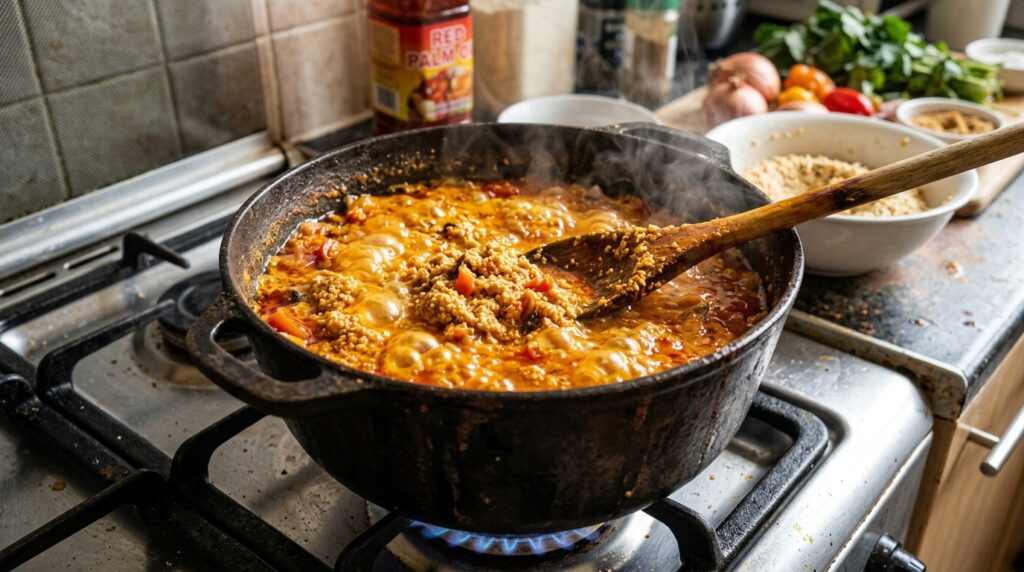
Pour in the reserved meat stock gradually, stirring gently as you go to loosen the soup to your desired consistency. Add the cooked assorted meat, stockfish (if using), smoked or dried fish, and ground crayfish. Stir everything together gently, being careful not to break up the dried fish too much. Add the seasoning cubes and taste for salt, adjusting as needed. Cover the pot and let everything simmer together over low to medium heat for about 10–15 minutes so all the flavors can blend and develop.
Add the washed and shredded spinach, bitter leaf, or ugu leaves directly into the pot. Stir gently to combine. If using bitter leaf, make sure it has been washed thoroughly to reduce the bitterness to a pleasant level. Cover the pot and cook for a final 5–7 minutes, until the greens are just wilted and tender but still vibrant in color. Taste the soup one final time and adjust salt and seasoning as needed.
Your egusi soup is ready. Serve it hot alongside pounded yam, eba, fufu, amala, semo, or white rice. Enjoy it as a full, satisfying meal.
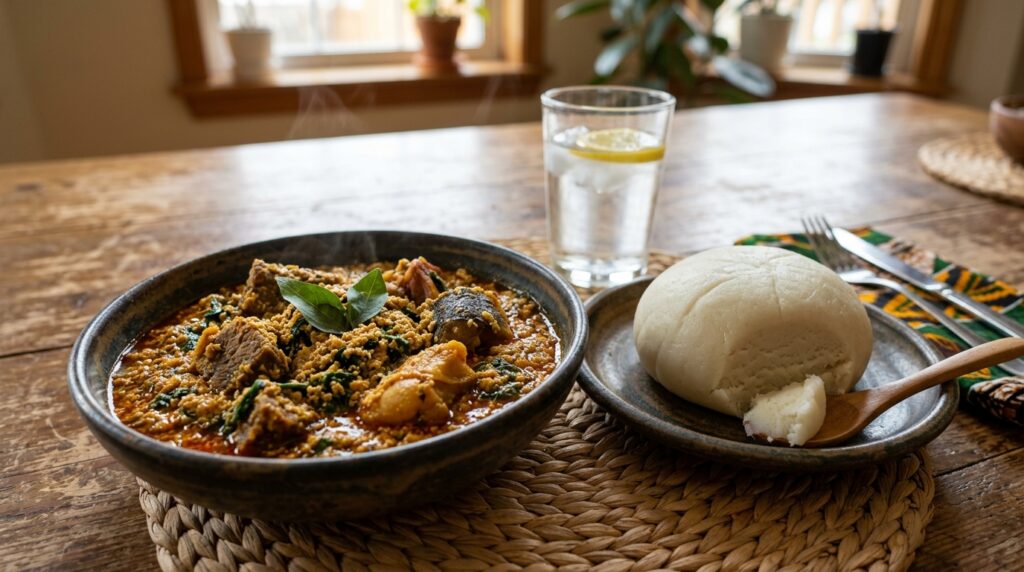
Egusi soup is most traditionally served with swallow foods. Here are the most popular pairings:
Pounded Yam — The most classic pairing. Smooth, stretchy, and perfectly neutral in flavor, pounded yam is ideal for scooping up the rich egusi soup. Eba (Garri) — Made from fermented cassava flour, eba is slightly tangy and pairs wonderfully with the bold flavors of egusi. Fufu — A soft, doughy swallow made from fermented cassava or yam flour, with a mild flavor that lets the soup shine. Amala — A darker, slightly earthy swallow made from yam flour, especially popular in Yoruba cuisine. Semovita (Semo) — A light, smooth, and neutral swallow that works well with any type of soup. White Rice — A slightly less traditional but equally satisfying option, especially for those new to Nigerian cuisine.
Refrigerator: Allow the soup to cool completely before storing it in an airtight container. Egusi soup keeps well in the refrigerator for up to 4 days. Freezer: Egusi soup freezes beautifully. Portion it into freezer-safe containers and freeze for up to 3 months. This makes it a great meal-prep option — make a large pot and freeze in portions for easy weeknight dinners. Reheating: Reheat on the stovetop over medium-low heat, adding a small splash of water or stock if the soup has thickened too much. Stir gently to avoid breaking up the meat and fish. You can also reheat individual portions in the microwave, covered, for 2–3 minutes, stirring halfway through.
Where can I buy egusi seeds or ground egusi? Ground egusi is widely available at African grocery stores and food markets, and increasingly in international food aisles of larger supermarkets. You can also find it online. If you live in Lagos or other parts of Nigeria, you can find freshly ground egusi at most local markets.
Can I make egusi soup without palm oil? Palm oil is what gives egusi soup its distinctive color, richness, and authentic flavor. While you can technically substitute with vegetable oil or coconut oil, the result will taste significantly different and less traditional. Palm oil is highly recommended for an authentic result.
What is the difference between the frying method and the boiling method? The frying method (used in this recipe) involves mixing the egusi into a paste and frying it in the pepper and oil base before adding stock, which gives a drier, more concentrated, nuttier flavor and firmer egusi clumps. The boiling method involves dissolving egusi in water and pouring it into the simmering soup, resulting in softer, more pillowy lumps in a slightly brothier soup. Both are authentic — it largely comes down to regional preference and personal taste.
Can I make egusi soup without meat? Yes — a vegetarian version can be made using extra smoked fish (or omitting it entirely), vegetable stock, and extra crayfish for depth. The soup will be lighter but still flavorful and satisfying.
How do I reduce the bitterness of bitter leaf? Wash the bitter leaf by hand in a large bowl of water, scrubbing the leaves together, then drain and repeat. Do this 4–6 times, squeezing the leaves each time to wring out the bitter juice, until the washing water runs mostly clear and the bitterness is at a tolerable, pleasant level.
Egusi soup is more than just a recipe — it is a deeply comforting, culturally rich dish that has nourished families across West Africa for generations. Once you understand the core steps and techniques, it becomes a dish you can make confidently and customize to your own taste, whether you prefer it with bitter leaf or ugu, loaded with assorted meats or kept simple with just chicken and smoked fish. Make a big pot, gather your family, and enjoy one of the most satisfying and soulful dishes West African cuisine has to offer.
Did you make this recipe? Leave a comment below and let me know how it turned out!