

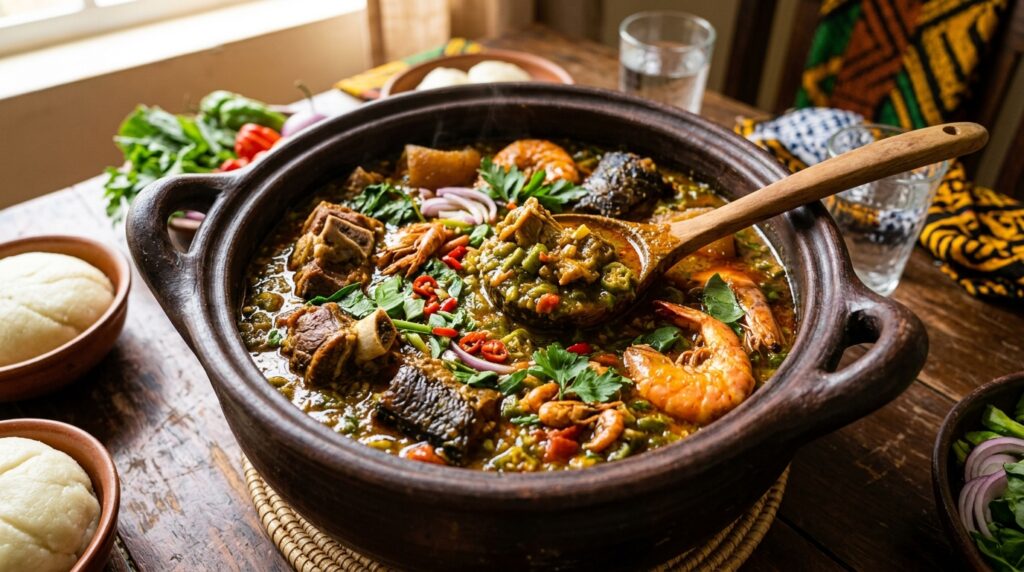

Okro soup is one of the most popular and widely loved soups in Nigerian cuisine and across West Africa. Thick, slimy in the best possible way, and packed with rich flavors from palm oil, assorted meats, smoked fish, and ground crayfish, okro soup is a true comfort food that warms you from the inside out. It is quick to prepare compared to many other Nigerian soups, making it a favorite for busy weeknights and festive gatherings alike.
Whether you love your okro soup plain and simple or loaded with assorted proteins, this comprehensive guide will walk you through everything you need to know — from choosing and preparing your okro to a foolproof step-by-step cooking method, helpful tips, common mistakes to avoid, popular variations, and answers to the most frequently asked questions. By the end of this article, you will be ready to make a pot of okro soup that is absolutely bursting with flavor.
What Is Okro Soup?
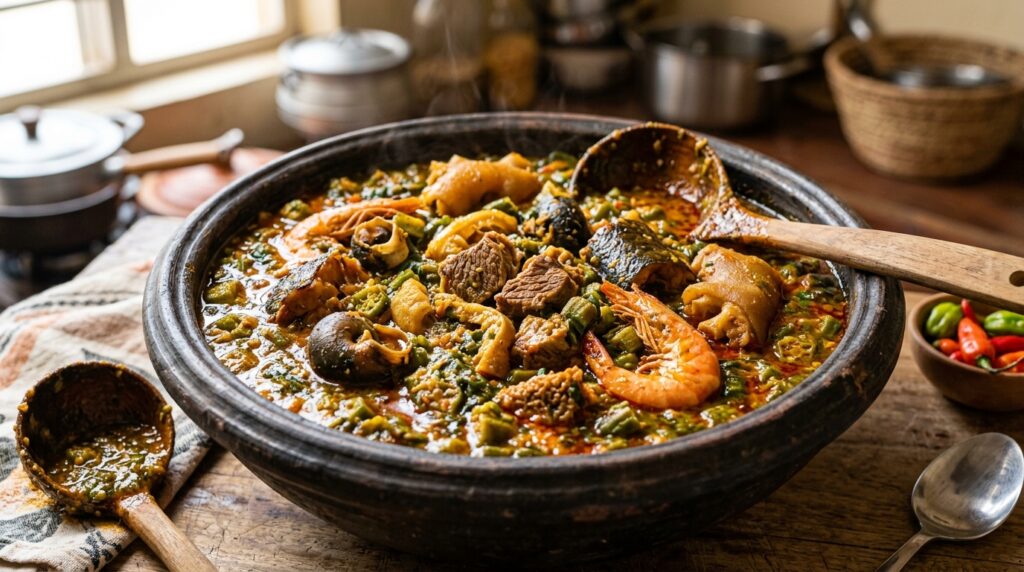
Okro soup, also known as okra soup, is a West African soup made primarily with fresh okra as its thickening agent. Unlike many soups that rely on starch or flour to create body, okro soup gets its distinctive thick, mucilaginous texture naturally from the okra itself. This “draw” quality — the way the soup stretches and pulls slightly when you scoop it — is what makes okro soup so uniquely satisfying and perfect for pairing with swallow foods.
Okro soup is closely related to but distinct from ofe akwu (palm nut soup) and ogbono soup — it is lighter in color, quicker to cook, and has a fresher, more vegetable-forward flavor profile. It is eaten all across Nigeria by the Igbo, Yoruba, Delta, and many other ethnic groups, each with their own unique twist on the recipe.
Ingredients
For the Soup
- 500g (about 4 cups) fresh okro (okra), washed and finely chopped or sliced
- ½ cup red palm oil
- 500g assorted meats (beef, tripe, shaki/cow stomach, ponmo/cow skin)
- 1 cup stockfish, soaked and cleaned
- 1 cup smoked fish or dried fish, deboned and cleaned
- 2 tablespoons ground crayfish
- 2 seasoning cubes (Maggi or Knorr)
- 1 medium onion, finely chopped (half for cooking the meat, half for the soup)
- 2–3 scotch bonnet peppers or fresh chili peppers, blended or finely chopped
- Salt to taste
- 1 cup meat stock or water
- 2 cups fresh or frozen spinach, ugu (pumpkin leaves), or bitter leaf (optional, for a mixed okro soup)
For Cooking the Meat
- 1 small onion, roughly chopped
- 1 seasoning cube
- Salt to taste
Step-by-Step Instructions
Step 1: Prepare and Cook the Assorted Meat
Wash all the assorted meats thoroughly under cold running water. Place them in a pot and add the roughly chopped onion, seasoning cube, and salt. Add just enough water to barely cover the meat. Cook over medium-high heat for 30–45 minutes, or until the meat is completely tender. If using stockfish, add it about halfway through the cooking time so it softens properly. Once the meat and stockfish are tender, remove them from the pot and set aside. Reserve all the meat stock in the pot — do not discard it as it forms the flavorful base of your soup.
Step 2: Prepare the Okro
Wash the fresh okro thoroughly under running water and pat dry. Trim off the tip and the stem end of each okro pod. Now chop or slice the okro according to the texture you prefer in your final soup. For a smoother, more uniformly thick soup, blend or grate the okro. For a chunkier texture with visible okro pieces, slice them into thin rounds or small cubes. The finer you cut or blend the okro, the more “draw” or slimy thickness your soup will have. Set the prepared okro aside.
Step 3: Heat the Palm Oil and Fry the Base
Place a clean, heavy-bottomed pot on medium heat and add the palm oil. Allow the oil to heat gently for about 2 minutes until it is liquid and hot but not smoking — do not bleach the oil. Add the finely chopped onion and fry for 2–3 minutes, stirring, until soft and translucent. Add the blended or chopped scotch bonnet peppers to the pot and fry for about 5–7 minutes, stirring frequently, until the peppers are cooked through and the raw smell is completely gone.
Step 4: Add the Meat Stock and Proteins
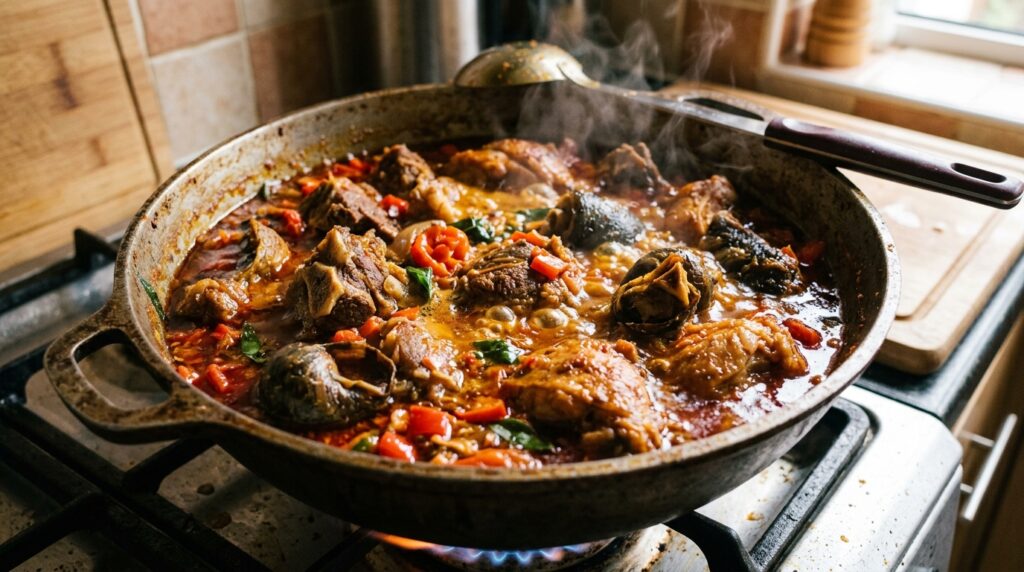
Pour the reserved meat stock into the pot with the fried pepper base and stir to combine. Add the cooked assorted meat and stockfish, smoked or dried fish, and ground crayfish. Stir everything together gently, being careful not to break up the dried fish too much. Add the seasoning cubes and taste for salt, adjusting as needed. Cover the pot and allow everything to simmer together over medium heat for about 10 minutes so all the flavors can meld together into a rich, well-seasoned broth.
Step 5: Add the Okro
Once the broth is well seasoned and flavorful, add the prepared okro directly into the pot. Stir gently to combine. At this stage, you will immediately notice the soup beginning to thicken as the okro releases its natural mucilage into the broth. Cook the okro on medium heat for 5–7 minutes, stirring occasionally. Be careful not to overcook the okro — you want it to be tender and fully incorporated into the soup but still bright green and vibrant, not dull or mushy. The less you cook the okro, the more “draw” and sliminess it will retain.
Love recipes like this that won’t leave you feeling bloated? 👇

👉 Click here to get the Complete Flat Belly Diet Cookbook for Women & 7-Day Meal Plan now!
Step 6: Add the Leafy Greens (Optional)
If you are making a mixed okro soup with leafy greens, add the washed and shredded spinach, ugu, or bitter leaf at this point. Stir gently to incorporate the greens into the soup. Cook for a final 3–5 minutes, until the greens are just wilted but still bright and tender. Taste the soup one final time and adjust the seasoning as needed.
Step 7: Serve
Your okro soup is ready. Remove from heat and serve hot alongside your favorite swallow food — pounded yam, eba, fufu, amala, or semo — or with white rice if you prefer. Enjoy immediately for the best texture.
Tips for the Best Okro Soup
- Use fresh okro whenever possible. Fresh okro has the best flavor, color, and natural thickening ability. Frozen okro is a good substitute but may release more water and result in a slightly less vibrant soup.
- Do not overcook the okro. The most common mistake with okro soup is cooking the okro for too long. Five to seven minutes is usually all it needs. Overcooked okro loses its beautiful green color, its texture becomes mushy, and it can develop an unpleasant, overly slimy consistency.
- Control your “draw” level. The more finely you cut or grate the okro, the more mucilaginous and stretchy your soup will be. If you prefer a thicker draw, blend or grate most of the okro. If you prefer a less slimy texture with more visible okro pieces, just slice them into rounds.
- Season the meat stock well. The meat stock is the foundation of your soup’s flavor, so make sure it is well seasoned before you build the rest of the soup on it.
- Use a good quantity of crayfish. Ground crayfish is essential to okro soup — it gives the soup that deep, savory umami flavor that makes it taste authentic and complete. Do not be shy with it.
- Add your greens last. Whether you are using spinach, ugu, or bitter leaf, always add the greens at the very end and cook them for just a few minutes so they retain their color, nutrients, and texture.
Common Mistakes to Avoid
- Overcooking the okro, which makes it mushy, dull-colored, and unpleasantly slimy instead of pleasantly thick and draw-y.
- Bleaching the palm oil, which destroys its nutrients, changes its color, and gives the soup a harsh, overly smoky taste. Always heat gently.
- Not frying the pepper base long enough before adding stock, which leaves the soup with a raw, uncooked pepper taste.
- Skipping the crayfish, which is one of the most important flavor builders in this soup. The soup will taste flat and incomplete without it.
- Adding too much water, which makes the soup thin and watery rather than rich and thick. Use your meat stock sparingly and build the consistency gradually.
Delicious Variations to Try
- Okro Soup with Ogbono — This is an incredibly popular combination in Nigerian cooking. Add 2–3 tablespoons of ground ogbono seeds to the palm oil before adding the pepper base. The ogbono adds another layer of draw and a deeply rich, nutty flavor that pairs beautifully with the okro.
- Okro Soup with Egusi — Stir in 3–4 tablespoons of ground egusi mixed into a paste with a little water, frying it briefly in the palm oil before building the rest of the soup. The egusi adds body, richness, and a nutty depth to the okro soup.
- Plain Okro Soup (Without Assorted Meat) — A lighter, quicker version made with just smoked fish, crayfish, and plenty of pepper. Ready in under 30 minutes and perfect for a simple, satisfying weeknight meal.
- Okro Pepper Soup — A thinner, spicier variation cooked in a pepper soup base instead of palm oil, with lots of pepper soup spice blend, uziza leaves, and your choice of protein for a warming, aromatic bowl.
- Mixed Okro and Vegetable Soup — A heartier version that combines okro with a generous amount of ugu or spinach, creating a nutrient-packed, filling soup that is especially popular among health-conscious cooks.
What to Serve with Okro Soup
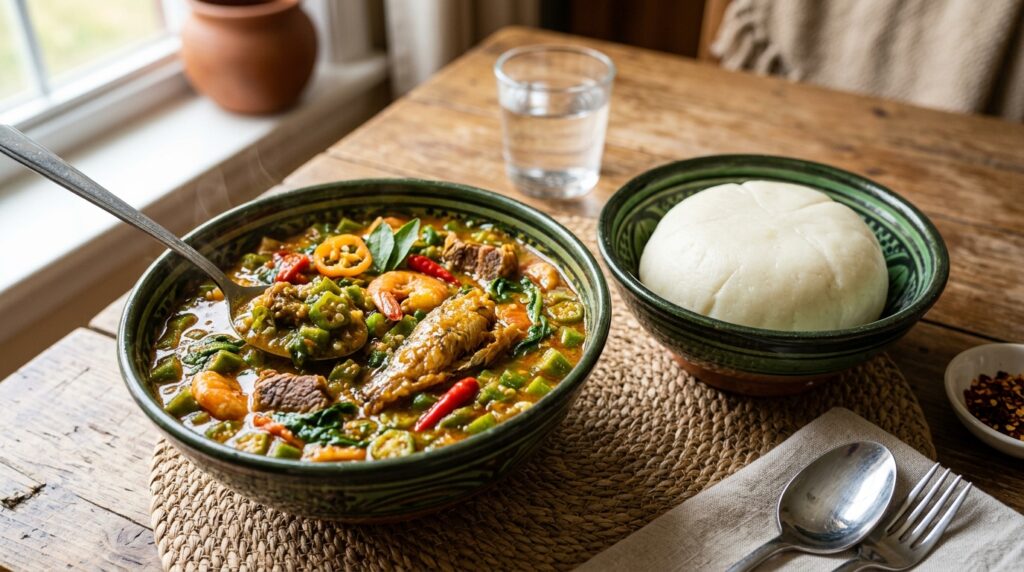
Okro soup pairs best with swallow foods that can be molded and used to scoop up the thick, draw-y soup. Here are the most popular options:
Pounded Yam — The most classic pairing for okro soup. Smooth, stretchy, and perfectly neutral, pounded yam complements the draw of the okro soup beautifully. Eba (Garri) — A firm, slightly tangy swallow made from fermented cassava flour that holds together perfectly for scooping. Fufu — Soft and doughy, fufu has a mild flavor that lets the bold soup flavors take center stage. Amala — A darker, slightly earthy swallow made from yam or plantain flour, especially popular in Yoruba households. Semovita (Semo) — A smooth, neutral swallow that works wonderfully with okro soup. White Rice — A less traditional but still satisfying option, especially for those who prefer not to eat swallow.
Storage and Reheating
Refrigerator: Allow the soup to cool completely, then transfer it to an airtight container and refrigerate for up to 3–4 days. Note that the okro may thicken further as it sits — this is completely normal. Freezer: Okro soup can be frozen for up to 2 months, though the texture of the okro may change slightly after freezing and thawing. For best results, freeze the soup base (with the meat and fish) separately and add fresh okro when reheating. Reheating: Reheat on the stovetop over medium-low heat, stirring gently and adding a splash of water or stock if the soup has become too thick. You can also microwave individual portions covered for 2–3 minutes, stirring halfway through.
Frequently Asked Questions
How do I reduce the sliminess of okro soup? If you prefer a less slimy okro soup, slice the okro into larger rounds rather than blending or grating it finely, and cook it for just a few minutes. You can also rinse the cut okro under cold water before adding it to the soup to remove some of the surface mucilage.
Can I use frozen okra instead of fresh? Yes — frozen okra works well as a substitute. Thaw it slightly and pat it dry before using to reduce excess water in the soup. The flavor and texture may be slightly less vibrant than fresh okro but the soup will still be delicious.
Do I have to use palm oil for okro soup? Palm oil is strongly recommended for an authentic Nigerian okro soup. It gives the soup its characteristic color, richness, and flavor. If palm oil is unavailable, you can substitute with vegetable oil or coconut oil, but be aware that the taste and color of the soup will be noticeably different.
What is the difference between okro soup and ogbono soup? Both are draw soups popular in Nigerian cuisine, but they are made with different thickening agents. Okro soup uses fresh or sliced okra to create its draw, while ogbono soup is thickened with ground ogbono (wild mango) seeds that dissolve completely into the broth, creating an even thicker, darker, more viscous soup. The two are sometimes combined for extra draw and depth of flavor.
Can I make okro soup without assorted meat? Absolutely — okro soup is just as delicious with just smoked fish, dried fish, and crayfish as the protein base. A fish-only okro soup comes together in under 30 minutes and is a lighter, quicker alternative to the full assorted meat version.
Why did my okro soup lose its green color? This happens when the okro is cooked for too long. To keep the soup vibrant and green, add the okro toward the end of the cooking process and cook it for no more than 5–7 minutes.
Final Thoughts
Okro soup is one of those dishes that never gets old — familiar, comforting, and deeply satisfying every single time. Once you master the basic recipe, it becomes one of the quickest and most rewarding soups in your cooking repertoire. Whether you make it plain and simple with smoked fish and crayfish, or load it up with assorted meats and mix in a handful of ugu leaves, a well-made pot of okro soup served with pounded yam or eba is one of the most comforting meals you can put on the table.
Give this recipe a try, make it your own, and do not forget to share the result with the people you love.
Did you make this recipe? Leave a comment below and let me know how it turned out!